


Polyurethane Foam is an important material in 2025. It helps many industries like insulation, furniture, packaging, and car making. Companies like it because it is strong, light, and easy to use. New ideas include bio-based foams and recycled car seats. These changes show people care more about the environment. The market was worth $58.04 billion in 2025. Asia-Pacific and the US saw the most growth.
| Market Segment | Key Growth Detail |
|---|---|
| Furniture & Bedding | Largest share: 35% |
| Building & Construction | Fastest CAGR for eco-materials |
| Rigid Foam | 45% share (mainly insulation) |
Die-Cutting Polyurethane Foam helps make exact shapes. This is good for packaging and car parts. It makes work faster and keeps products safe.
Key Takeaways
- Polyurethane foam is used in many things. It is found in furniture, buildings, cars, packaging, and medical devices. This is because it is light, strong, and bends easily.
- There are different kinds of polyurethane foam. Flexible foam gives comfort and absorbs shocks. Rigid foam is used for insulation and support. Some foams are made for special uses, like in boats or for medical tools.
- Makers use new ways and green materials to make polyurethane foam. They use things like bio-based fillers and recycled foam. This helps make the foam safer and better for the planet.
- Safety matters when working with polyurethane foam. People should wear protective gear and have good airflow. This lowers health risks from chemicals and gases.
- Picking foam with recycled or bio-based parts helps the earth. It cuts down on pollution and waste in the polyurethane foam business.
Polyurethane Foam Overview
What Is Polyurethane Foam
Polyurethane Foam is a kind of plastic. It is made when polyisocyanates and polyols react together. This reaction creates a network with many tiny cells inside. The main parts are di- and tri-isocyanates like TDI and MDI, plus polyols. Makers can change how the foam acts by using different chemicals and additives. If they use long, bendy polyol chains, the foam turns out soft and stretchy. More crosslinking makes the foam hard and strong. Water is also used in the process. It reacts and makes carbon dioxide gas. The gas forms bubbles, so the foam is light and spongy. Polyurethane Foam can be soft or hard, based on how it is made.
Key Uses
Polyurethane Foam is found in many things we use every day.
- Furniture and Bedding: It is in cushions and mattresses. It is soft and lasts a long time.
- Building and Construction: It insulates walls and roofs. This helps save energy at home.
- Automotive: It is used in seats, headrests, and bumpers. It makes cars lighter and more comfy.
- Appliances: It keeps fridges and freezers cold. This saves electricity.
- Packaging: It protects breakable items during shipping. It absorbs shocks.
- Medical Devices: It is in wound dressings, bedding, and some implants. It is tough and useful.
- Electronics: It keeps small parts safe and gives insulation.
- Marine and Sports: It helps boats float and pads sports gear.
Tip: Polyurethane Foam is flexible, light, and stands up to bad weather. This makes it good for tough places.
Importance in 2025
Polyurethane Foam is very important in today’s industries. Its market value keeps going up each year. Sales are expected to rise from $37.47 billion to $83.04 billion between 2025 and 2033. Asia-Pacific is growing the fastest and needs the most foam. Flexible foam is the most popular because it is comfy and can be used in many ways. Bedding, furniture, car, and building companies use it the most. Companies are starting recycling and using eco-friendly materials to help the planet. The building industry is using more foam for insulation. Car makers use it to make cars lighter and save fuel. These changes show Polyurethane Foam is needed for saving energy, comfort, and helping the environment.
| Aspect | Details |
|---|---|
| Market Size | The global PU foam market was $60.5B in 2017. It is expected to be over $79B in 2021 and $83.04B in 2033. |
| Key Industries | Furniture, Bedding, Automotive, Construction, Packaging, Electronics, Medical, Marine |
| Properties | It is light, strong, can be changed, saves energy, costs less, and resists chemicals. |
| Sustainability | There are recycling programs, bio-based materials, and lower emissions. |
Types

Flexible Polyurethane Foam
Flexible polyurethane foam feels soft and bouncy. It is used in things that need comfort and support. Most cushions, mattresses, and car seats have this foam. The foam has open cells. Air moves through it easily. This makes it light and helps it spring back after being pressed.
The chemicals have long, bendy polyol chains and not many crosslinks. This keeps the foam soft and easy to shape. Flexible foams are less dense and not as strong as rigid ones. They are best for things that need to be soft and absorb shocks, like packaging.
Note: Flexible polyurethane foam is used most in packaging. It absorbs shocks and keeps breakable things safe.
| Foam Type | Density Range (kg/m³) | Compressive Strength Range (kPa) | Cell Structure | Main Uses |
|---|---|---|---|---|
| Flexible PU Foam | Lower than rigid | Lower than rigid | Mostly open cells | Furniture, bedding, packaging |
Rigid Polyurethane Foam
Rigid polyurethane foam is hard and strong. Builders and engineers use it for insulation and support. The foam has closed cells. These trap air and keep water out. This makes it great for keeping buildings warm or cold. It is also used in fridges and freezers.
The chemicals have more crosslinks and shorter polyol chains. This makes the foam dense and strong. Some rigid foams use bio-based materials like lignin. This makes them stronger and better for the planet.
| Foam Type | Density Range (kg/m³) | Compressive Strength Range (kPa) | Lignin Content (%) | Cell Structure | Main Uses |
|---|---|---|---|---|---|
| Rigid PU Foam (Lignin-based) | 20–220 | 50–4224 | ~10–16.7 | Mostly closed cells | Insulation, appliances, marine |
Builders pick rigid polyurethane foam because it is strong and keeps water out. Closed-cell foam is used most for boats and insulation.
Specialized Foams
Specialized polyurethane foams are made for special jobs. Makers can change the recipe to give the foam new features. Marine foams resist water and last longer. Packaging foams can be shaped to fit fragile things. Some foams use bio-based polyols or lignin to be stronger or greener.
How these foams work depends on how they are made. Chemical changes can make the foam react better and be more even. These foams can have different density, strength, and cell shapes for their jobs.
| Foam Type | Density/Strength | Cell Structure | Main Features | Main Uses |
|---|---|---|---|---|
| Specialized Foams | Variable | Variable | Custom properties, eco-friendly options | Marine, medical, electronics |
- Marine: Rigid polyurethane foam with closed cells helps boats stay strong and dry.
- Packaging: Flexible foam protects electronics and medical tools during shipping.
- Insulation: Rigid foam keeps buildings warm or cool and stops moisture.
Tip: Polyurethane foam has both soft and hard parts. Changing the polyol or adding lignin can make it stronger or more bendy.
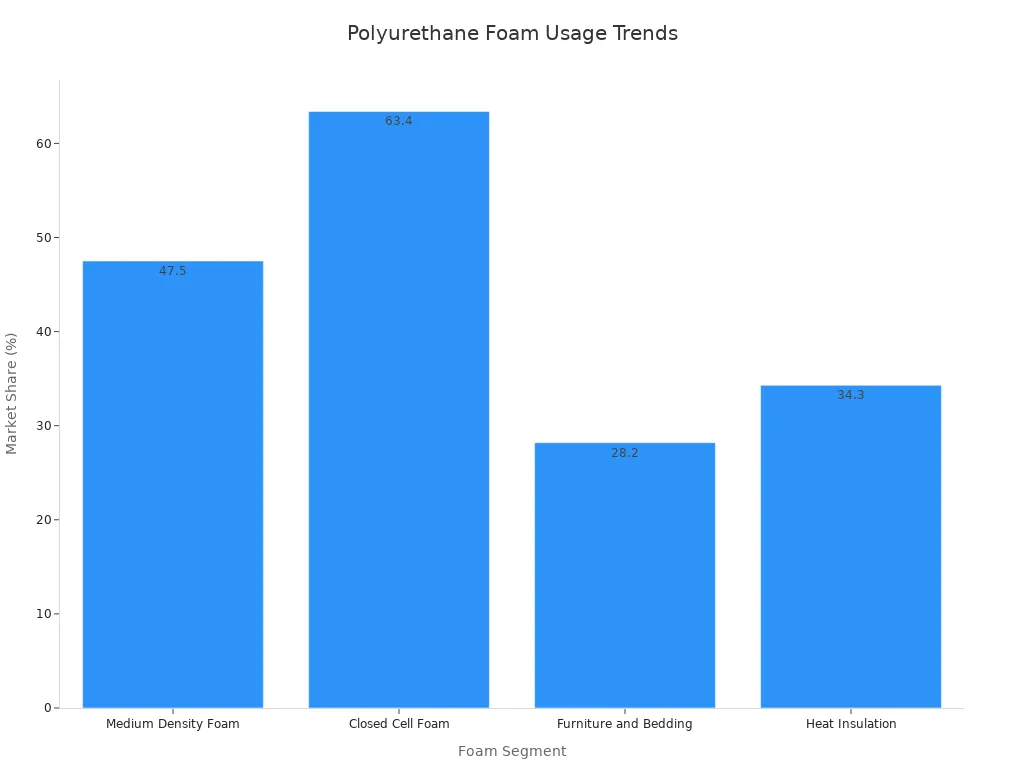
| Category | Segment/Type | Market Share (2023) | Industry/Application |
|---|---|---|---|
| Foam Type | Flexible Foam | Largest share | Packaging (shock absorption) |
| Foam Structure | Closed Cell Foam | 63.4% | Marine, Insulation (water resistance) |
| End-Use Industry | Furniture and Bedding | 28.2% | Mattresses, sofas |
| End-Use Industry | Heat Insulation | 34.3% | Building energy efficiency |
Polyurethane foam types help many industries. Flexible foams cushion and protect things. Rigid foams insulate and give support. Specialized foams fix special problems in boats, medicine, and packaging. The right foam depends on how strong, dense, or open the cells need to be.
Manufacturing
Production Methods
Polyurethane foam can be made in old and new ways. The old way mixes diisocyanates and polyols. This makes urethane links and forms foam. Blowing agents like water or carbon dioxide make the foam light. They also fill it with tiny cells. The chemicals used change how the foam feels and works.
New ways include slabstock and molded foam. In slabstock, liquids rise into big buns. Workers cut these buns for beds or chairs. Molded foam uses molds to make special shapes. This is common for car seats and cushions. Cutting, slitting, and bonding help shape the foam for many uses.
Recycling is very important now. Bonded carpet cushion uses recycled foam. It covers over 80% of the carpet cushion market. New methods like 3D printing and injection molding make custom foam parts. These help cars, buildings, and even medical tools.
Note: There are one-component and two-component systems. Two-component foams are used a lot in buildings and cars. They insulate well and lower noise.
| Aspect | Evidence Summary |
|---|---|
| Raw Material Price | Polyol and isocyanate prices change fast. This changes costs. |
| Regulatory Compliance | New chemical formulas lower emissions and follow safety rules. |
| Market Growth Drivers | More cars and buildings need more two-component foams. |
| Capacity Expansion | Companies like Dow make more foam to meet demand. |
| Regional Insights | China makes the most foam and builds energy-saving buildings. |
| Product Innovation | New sealants and formulas make foam safer and better. |
Innovations
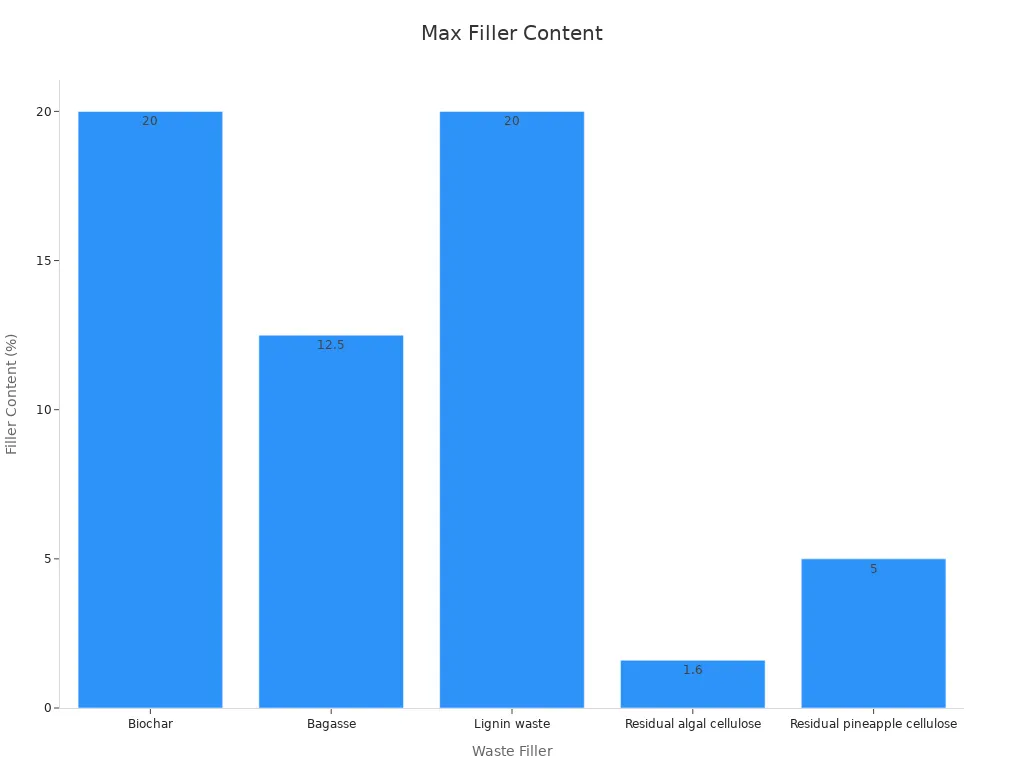
In 2025, makers want safer and greener materials. Many use bio-based fillers like biochar, bagasse, and lignin. These fillers make foam stronger, more stable, or easier to recycle. For example, adding up to 20% biochar helps foam handle heat. Bagasse makes foam denser and helps it break down.
Makers also stop using harmful blowing agents like CFCs. They pick safer ones like water or carbon dioxide. The US EPA has strict rules to limit dangerous emissions. Companies make new formulas to follow these rules and keep workers safe.
The global polyurethane market keeps growing. Only about 30% of polyurethane waste gets recycled. But new recycling programs and bio-based materials give hope for a greener future. These changes make foam safer and better for the planet.
Polyurethane Foam Properties

Physical Properties
Polyurethane Foam can be soft or hard. This depends on its density and cell structure. Lab tests check things like pore size, thickness, and hardness. They also measure density. Medifoam® N has even pore size and medium thickness. It can soak up a lot of liquid. These features help wounds heal and are good for medical use. Tests like ASTM D1623 and ASTM D1621 show how strong the foam is. These tests check how the foam acts when squeezed or pulled. The table below shows how density changes hardness and volume fraction:
| Sample Density (PCF) | Density (g/cm³) | Volume Fraction | Shore D Hardness |
|---|---|---|---|
| 10 | 0.16 | 0.14 | 15 |
| 25 | 0.40 | 0.34 | 43 |
| 40 | 0.64 | 0.54 | 65 |
Thermal tests show the foam stays stable up to 155 °C. It starts to break down above 260 °C. This helps engineers pick the right foam for each job.
Performance
Polyurethane Foam works well in many places. It absorbs shocks and keeps water out. It holds its shape when pressed. Tests show more filler can make foam stronger. But too much filler can make it weaker. Biological tests check if the foam is safe for plants and bacteria. Most foam does not hurt plants or bacteria. This means it is stable and safe. Thicker foam or foam with more filler blocks gamma rays better.
Tip: How Polyurethane Foam works depends on its structure, fillers, and how it is made.
Standards
Makers follow strict rules to keep Polyurethane Foam safe and high quality. ASTM and EN standards tell how to test strength and density. The CertiPURTM program limits harmful chemicals to 5 mg/kg. Safety checks use Margin of Safety (MOS) and Risk Characterization Ratio (RCR). A MOS above 1 or RCR below 1 means the foam is safe. Special tests look for chemical leftovers and emissions. This helps companies follow safety rules.
| Aspect | Quantitative Standard / Benchmark | Description / Basis |
|---|---|---|
| CertiPURTM limit for diamines | ≤ 5 mg/kg (sum of TDA and MDA) | Voluntary industry certification limit based on risk assessment to control carcinogenic diamines. |
| Margin of Safety (MOS) | MOS > 1 indicates no unacceptable risk | MOS = toxicological benchmark / average daily internal dose; used in risk characterization. |
| Risk Characterization Ratio (RCR) | RCR < 1 indicates no unacceptable risk | Inverse of MOS; used to assess safety margins. |
Safety and Environment
Health Concerns
Polyurethane foam can be risky for health, mostly when it is put in or taken out. Workers who spray or cut the foam might breathe in isocyanate vapors or dust. These chemicals can make it hard to breathe and can bother the skin. Touching the foam without gloves or masks can also make people feel sick.
A study looked at construction workers who used spray foam. Many workers had health problems after working with it:
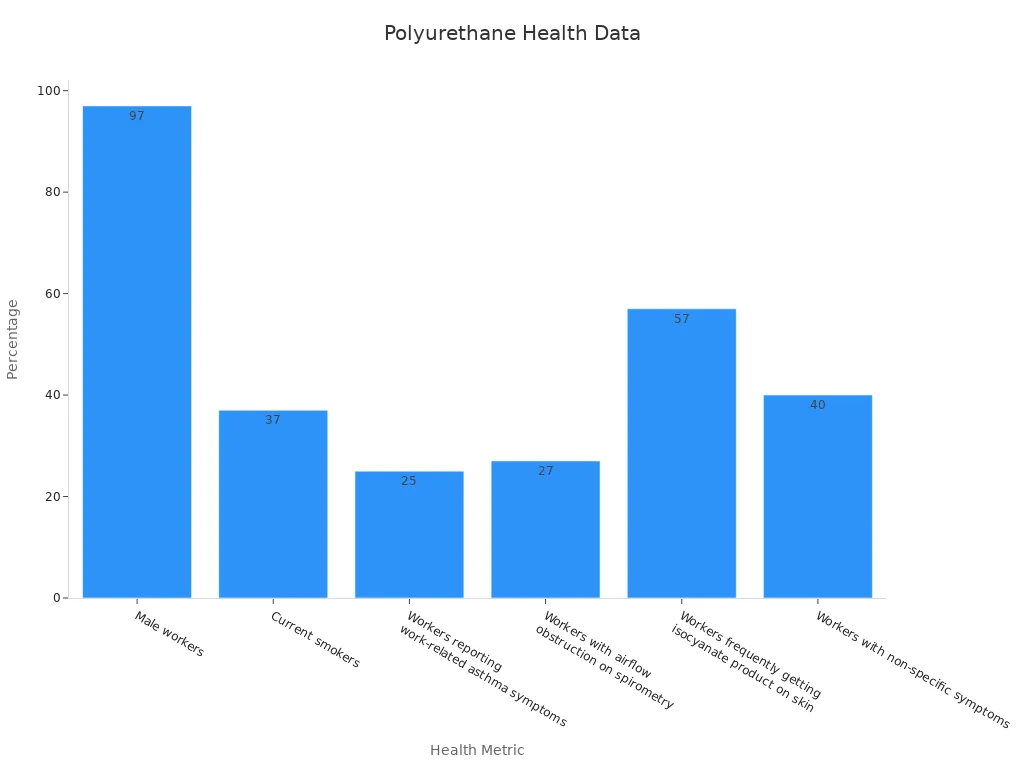
| Metric | Value |
|---|---|
| Workers reporting work-related asthma symptoms | 25% |
| Workers with airflow obstruction on spirometry | 27% |
| Workers frequently getting isocyanate product on skin | 57% |
| Workers with non-specific symptoms | 40% |
Researchers found that isocyanate exposure makes the body create special antibodies. This means the immune system reacts to these chemicals. Some studies showed that even small amounts of chemicals from foam, like sulfur dioxide, can hurt animal lungs. These chemicals might cause coughing, asthma, or lung damage if people breathe them for a long time.
Safety tip: People should wear safety gear and make sure there is fresh air when working with polyurethane foam.
VOCs and Off-Gassing
Polyurethane foam can let out chemicals into the air. These are called volatile organic compounds (VOCs). Off-gassing happens when the foam releases VOCs and other things after it is made or put in. How much off-gassing happens depends on the temperature and how much air moves in the room.
- Spray foam can give off isocyanate vapors and aerosols that often go above safe limits set by OSHA.
- People can breathe in these chemicals or get them on their skin during cutting, trimming, or when the foam is heated.
- After the foam cures, it becomes safer, but moving or breaking the foam can release more chemicals.
- Off-gassing is not fully understood, so experts use special tests to measure it.
- The EPA suggests checking the air after installation to make sure it is safe to go back inside.
- Long-term risks may happen if the foam is disturbed during repairs or renovations.
- Removing spray foam does not always stop off-gassing and can make new hazards.
Common VOCs from polyurethane foam include isocyanates and flame retardants. These can cause breathing problems like asthma or bronchitis. Breathing these chemicals for a long time may cause worse health problems.
A study tested foam mattresses in a chamber and found that, even in the worst cases, the VOC levels did not cause health risks for people. The study used ISO 13419-1, a standard method for measuring emissions. Still, experts say to use low-VOC products and have professionals install the foam.
Note: Good airflow and waiting for the foam to cure can help lower the chance of breathing in bad chemicals.
Sustainability
Polyurethane foam makers now try to recycle and use eco-friendly materials. Recycling foam saves energy and makes less pollution than burning or throwing it away. Mechanical recycling, where foam is shredded and reused, uses the least energy and causes the least global warming. Chemical recycling, like acidolysis, is better for the planet than burning foam or putting it in landfills.
- Using 50% to 75% recycled polyol in foam helps the environment.
- Flexible foam with more recycled content lets out fewer VOCs, so it is safer for nature.
- Chemical recycling methods, such as pyrolysis, often have less impact on the planet than other ways of getting rid of foam.
- Isocyanates, especially MDI, cause most of the environmental impact in foam production and recycling.
- Landfilling foam uses less energy but leaves waste that lasts a long time.
Many companies now use plant oils, lignin, and farm waste to make foam. These bio-based materials help use less fossil fuel and lower the carbon footprint. The CertiPUR-US program checks that foam has at least 25% bio-based content and meets safety rules.
| Numerical Data Point | Description |
|---|---|
| 25% Biobased Content | Minimum biobased content required for CertiPUR-US certification of polyurethane foams, verified by ASTM D6866-22 Method B. |
| ~33% (One-third) | Approximate proportion of lignin in plant mass, a bio-based raw material used for bio-polyols. |
| ASTM D6866-22 Method B | Standard method using Accelerator Mass Spectrometer (AMS) to measure biobased carbon content in foam products. |
| 2008 | Year CertiPUR-US program was started to check foam content, emissions, and durability. |
| Higher than 25% | Some certified foams have more than 25% bio-based content, and there are plans to certify higher levels in the future. |
🌱 Eco tip: Picking foam with recycled or bio-based content helps the planet and supports a greener world.
The industry is always changing with new ideas and safety steps. Companies want to save energy, make lighter things, and use green materials. The table below shows important changes in 2025:
| Aspect | Highlights |
|---|---|
| Trends | Energy-efficient buildings, automotive lightweighting, digital integration |
| Innovations | Bio-based polyols, recycled content, automation |
| Safety Measures | Low-VOC formulations, strict regulations |
Learning about the best ways to work and new tools helps people pick safer and greener options. To learn more, check out industry reports and trusted websites about the environment.
FAQ
What makes polyurethane foam different from other foams?
Polyurethane foam is special because it can be soft or hard. Makers can change how dense it is and how its cells are shaped. This foam is used in many things like furniture, insulation, and packaging.
Is polyurethane foam safe for home use?
Most polyurethane foam is safe once it is fully cured. People should let new foam air out in a room with good airflow. Using certified low-VOC foam lowers health risks.
Can people recycle polyurethane foam?
Yes, many companies recycle polyurethane foam. They cut up old foam and use it in carpet pads or new things. Some programs use chemicals to get back the raw materials.
How long does polyurethane foam last?
Polyurethane foam can last for many years. How long it lasts depends on how it is used and where it is kept. Foam in furniture may last 7 to 10 years, but insulation foam can last much longer.
Does polyurethane foam harm the environment?
Polyurethane foam can hurt the environment if it is not recycled. New foams use bio-based and recycled materials. Picking eco-friendly foam helps cut down on pollution and waste.

