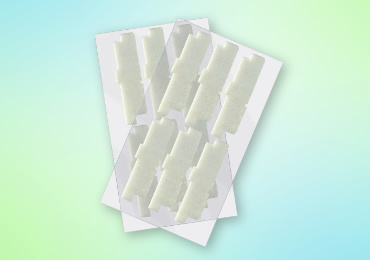
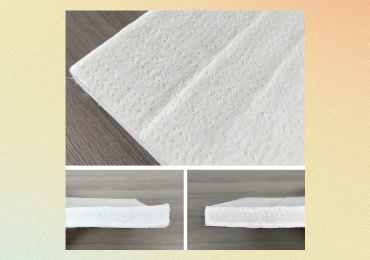
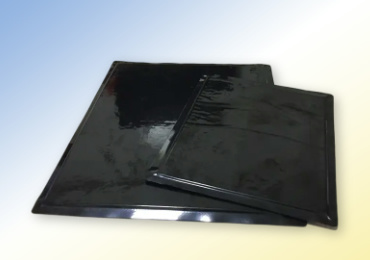
Battery Insulation Paper – Our Precision Die-Cutting Solutions
Our Die-Cutting Equipment

Our Battery Insulation Paper is produced in a Class 1000 cleanroom to meet the stringent cleanliness and precision standards required for battery manufacturing. The automatic roll-to-roll lamination machines ensure consistent bonding of insulation layers, maintaining material integrity and electrical performance.

Our automatic lamination waste removal systems eliminate excess material quickly and cleanly, preventing contamination and preserving the dimensional accuracy crucial for fitting insulation sheets within tight battery module tolerances.

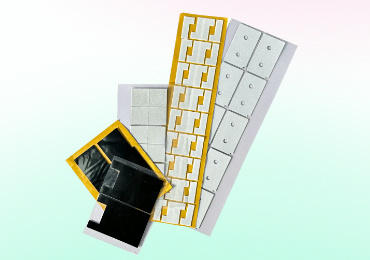
Precision die-cutting machines handle complex geometries and achieve tolerances down to ±0.01mm, enabling us to produce Battery Insulation Paper components that align perfectly with cell structures and assembly layouts.
Our Die-Cutting Quality Control

Dimensional verification is performed using 2.5D measurement instruments, ensuring each cut piece matches design specifications. Dust particle counters maintain cleanroom air quality, while CCD and binocular microscopes detect any micro-defects in the insulation surface.

Peel strength testers confirm adhesive bonding durability when lamination is required, thickness gauges monitor uniformity, and environmental chambers simulate extreme operating conditions to ensure the Battery Insulation Paper retains performance over the battery’s lifespan.

In-process quality control (IPQC) ensures continuous monitoring during production. Holding power testers validate adhesive stability, and electrical resistance testers measure insulation capability, guaranteeing reliable performance in high-demand applications.
Our Inspection Team

Within our Class 1000 cleanroom, the inspection team conducts final checks on all Battery Insulation Paper products, ensuring flawless dimensions, no particulate contamination, and consistent electrical insulation before shipment.
Our Mold Management

Our mold workshop designs and manufactures precision cutting tools using CAD design, CNC machining, and laser cutting. Each mold is regularly maintained, adjusted, and lifespan-tracked to guarantee consistently accurate die-cuts for Battery Insulation Paper.
Our Product Cases

One example is the dust-proof mesh and gasket rings used in smartphones, earphones, and tablets to block dust while maintaining audio quality. Produced in a controlled cleanroom with precision die-cutting, these parts meet strict airflow and size specifications.

Another case is foam gaskets for smartphone camera modules, designed to prevent dust entry and light leakage. Automated lamination ensures precise adhesive application, and advanced die-cutting achieves complex shapes consistently.

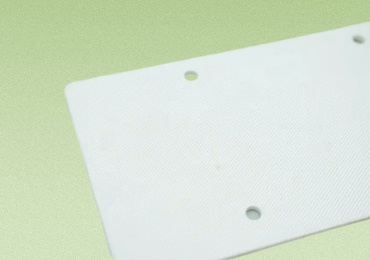
The third example is PET or PC sheets with protective films, used in screen protection, insulation layers, and anti-scratch applications. Each piece undergoes strict dimensional checks, surface inspection, and environmental durability tests.
Contact us to customize your Battery Insulation Paper solutions!
How does insulation paper thickness affect battery performance?
The thickness of insulation paper plays a significant role in the performance and safety of batteries. Here’s how different thicknesses can impact various aspects:
Electrical Insulation:
Thicker Insulation: Provides better protection against electrical faults by preventing unintended current flow, reducing the risk of short circuits.
Thinner Insulation: May be less effective in preventing electrical faults, potentially increasing the risk of short circuits.
Thermal Management:
Thicker Insulation: Can delay the spread of heat within the battery pack, potentially preventing thermal runaway propagation. However, excessive thickness might trap heat, leading to higher internal temperatures.
Optimal Thickness: Research suggests that an insulation layer around 2 mm thick offers a balance between delaying heat spread and avoiding excessive heat retention.
Mechanical Strength:
Thicker Insulation: Enhances the mechanical strength of the battery, making it more resistant to physical damage.
Thinner Insulation: While lighter, may not provide sufficient mechanical protection, making the battery more susceptible to damage.
Does insulation paper have flame-retardant properties?
The flame-retardant properties of insulation paper depend on its type and any treatments it has undergone:
Standard Insulation Papers:
Limited Flame Resistance: Common insulation papers, such as DMD or NMN, typically offer basic insulation but are not inherently flame-resistant.
Enhancing Flame Resistance: To improve their flame-retardant properties, these papers can be treated with special chemicals or combined with flame-resistant materials.
Specialised Flame-Retardant Insulation Papers:
Nomex® Paper: This aramid paper is naturally flame-resistant. It doesn’t melt and meets the UL 94 V-0 standard, indicating it stops burning within 10 seconds without dripping flaming particles.
PolyPro FR®: A flame-retardant polypropylene designed for electrical insulation, it also complies with UL 94 V-0 standards.
Understanding Flame-Retardant Standards:
How strong is insulation paper?
The strength of insulation paper varies based on its type and manufacturing process. Regular insulation papers, such as DMD, NMN, and NHN, offer moderate strength suitable for basic electrical insulation tasks. However, they might not endure significant mechanical stress.
In contrast, Nomex® insulation paper is renowned for its exceptional mechanical toughness. It boasts high strength, resilience, and resistance to tearing and abrasion. Thinner variants of Nomex® are notably flexible, facilitating easy handling and installation. Moreover, Nomex® maintains its robust properties across a broad temperature range, from extremely low temperatures up to 220°C, ensuring consistent performance in diverse environments.
In summary, while standard insulation papers are adequate for general uses, Nomex® offers superior strength and durability, making it ideal for applications demanding higher mechanical resilience.
What are the advantages of insulation paper?
Insulation paper offers several benefits over other insulating materials:
Excellent Insulating Ability: It effectively prevents electrical currents from causing faults like short circuits.
Strong and Durable: The paper has good strength, resisting tears and wear, which helps it withstand physical stress.
Handles High Temperatures: It maintains its properties even when exposed to high heat for long periods.
Resistant to Chemicals: Insulation paper stands up well against many chemicals, including acids and bases, making it suitable for various environments.
Flexible and Easy to Use: Its flexibility allows for easy cutting and shaping, fitting different equipment needs.
Environmentally Friendly: Made mainly from natural materials, it is non-toxic and can often be recycled.
Cost-Effective: Compared to some other insulating materials, insulation paper is generally more affordable.
Versatile: It performs well in various conditions, including high humidity and extreme temperatures.
These qualities make insulation paper a reliable choice for ensuring electrical equipment operates safely and efficiently.
Is insulation paper suitable for all EV batteries?
Not always. The use of insulation paper in electric vehicle (EV) batteries depends on the battery’s design and requirements. For example, in high-voltage batteries (600-800 volts), specialised materials like NORYL™ NHP8000VT3 resin are often preferred. This resin offers excellent electrical insulation and flame retardant properties, meeting strict safety standards. It also allows for thinner insulation layers, which can help reduce the overall weight of the battery pack. Therefore, while insulation paper may be suitable for some applications, other materials might be more appropriate for specific battery designs.