

Quality Die-Cutting Electrically Conductive Tapes Manufacturing
- Partner with Us for Your Next Die-Cutting Electrically Conductive Project
- IATF 16949:2016 Certification
- 3-day rapid production of samples
- Low MOQ to Support Your Business
- Product Details
- Application Overview
- Material Insights
- Electrically conductive tapes ensure good electrical conductivity for signal transmission and grounding.
- EMI and RFI Shielding tapes block electromagnetic and radio frequency interference, protecting devices from disruptions.
- Soft texture allows for easy cutting and shaping for manual or automated use.
- Electrically conductive tapes stick firmly to metal surfaces for stable electrical connections.
- They resist chemicals and outdoor weather, keeping performance intact.
- Suitable for high-temperature environments without losing functionality.
With years of die-cutting experience, provides solutions for various applications of Electrically Conductive Tapes.
- Consumer Electronics: Used in smartphones and laptops to shield against electromagnetic interference (EMI) and improve grounding.
- Automotive Industry: Used for EMI shielding and grounding in vehicles to protect electronic systems from interference.
- Telecommunication Infrastructure: Applied in data centres and communication stations to shield cables and devices from signal interference.
- Aerospace and Defence Electronics: Provides shielding and grounding for sensitive equipment in high-performance environments.
- Medical Equipment: Used to connect and secure sensors in medical monitoring devices, requiring good flexibility and biocompatibility.
- Aluminum Foil Tape: Known for its strong conductivity and durability, it’s widely used in aerospace and mechanical industries for shielding wires and electronic components from interference.
- Copper Foil Tape: Offers excellent shielding against electromagnetic interference (EMI), especially useful for protecting cables exposed to the elements and blocking radio or magnetic waves.
- Nickel/Copper Foil Tape: Combines nickel and copper to provide conductivity in multiple directions, often used for grounding and EMI shielding in sensitive electronic equipment.
- Conductive Foam Tape: Made with conductive foam, it shields against interference while filling gaps in casings, providing protection for delicate components.
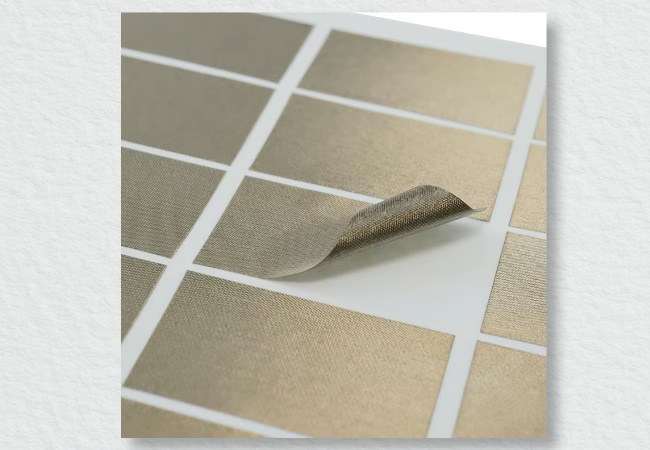
- Conductive Non-Woven Tape: Offers quick adhesion and adapts well to uneven surfaces, ideal for applications requiring reliable contact on irregular shapes.

Die-Cutting Process for Electrically Conductive Tapes
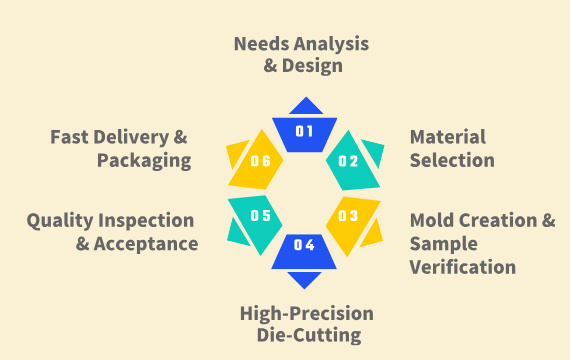
We select high-quality materials, such as conductive foils and films, tailored to meet specific conductivity and durability requirements.
Each material undergoes strict quality checks to guarantee defect-free performance.
Using advanced moulding techniques like laser cutting, we create sharp and durable dies for accurate cutting.
Whether flatbed or rotary methods are used, we ensures precise shapes and sizes, meeting diverse product demands with efficiency.
Find Your Perfect Die Cutting Materials
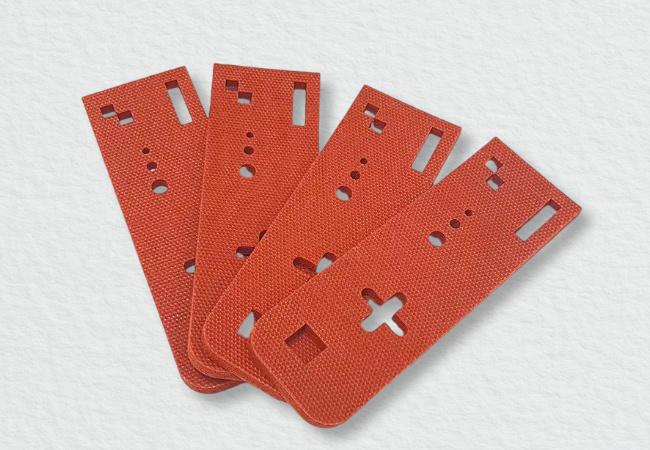
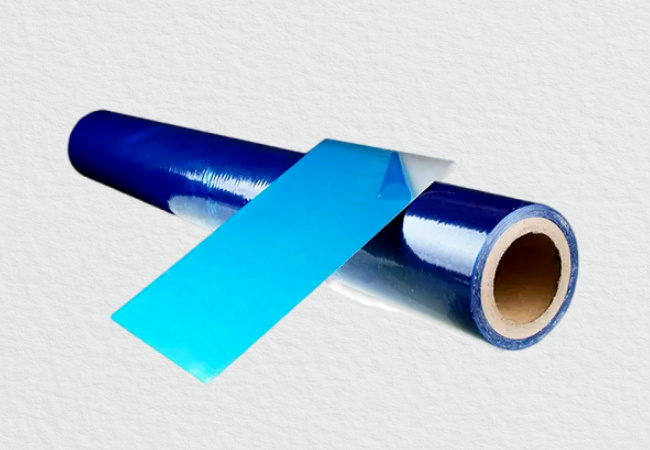
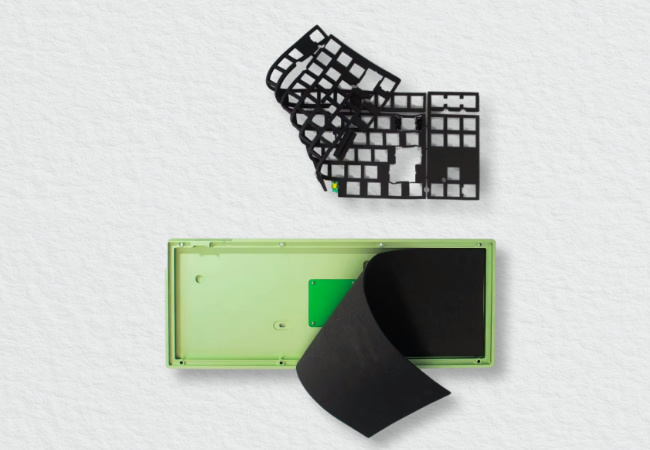
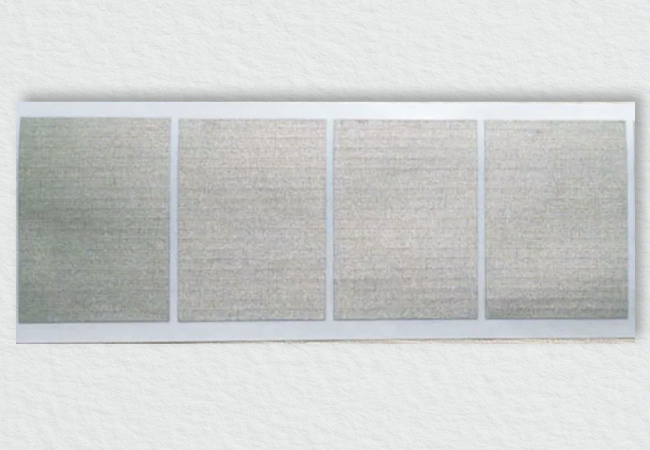
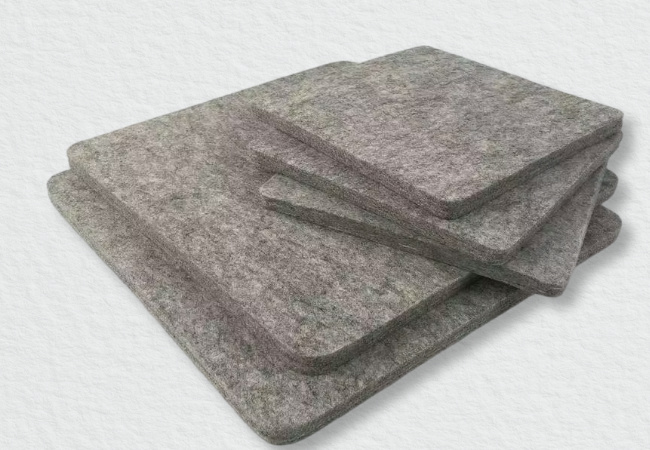
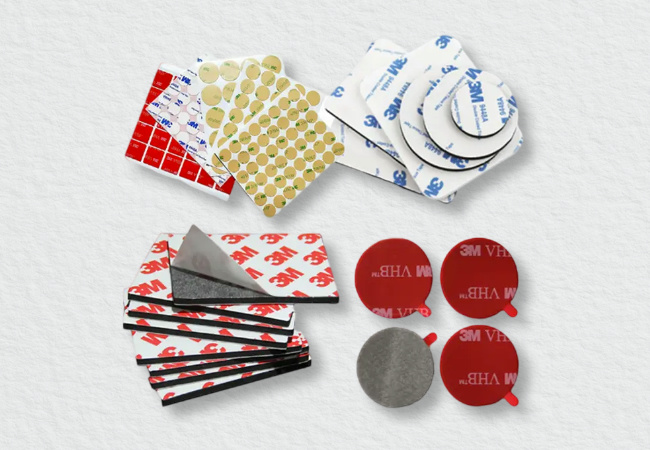
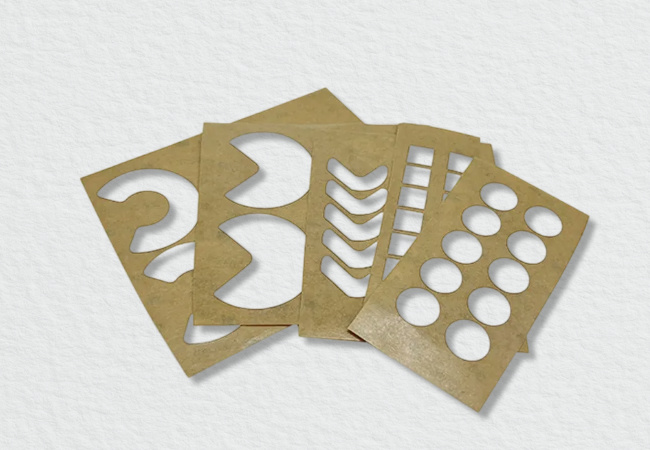
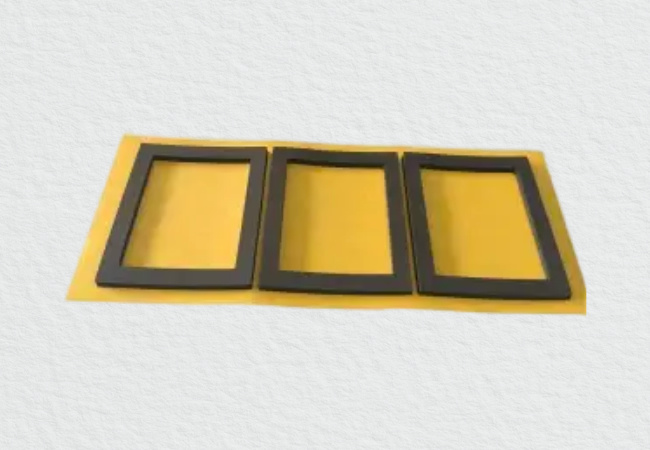
Electrically Conductive Tape – Our Precision Die-Cutting Solutions
Our Die-Cutting Equipment

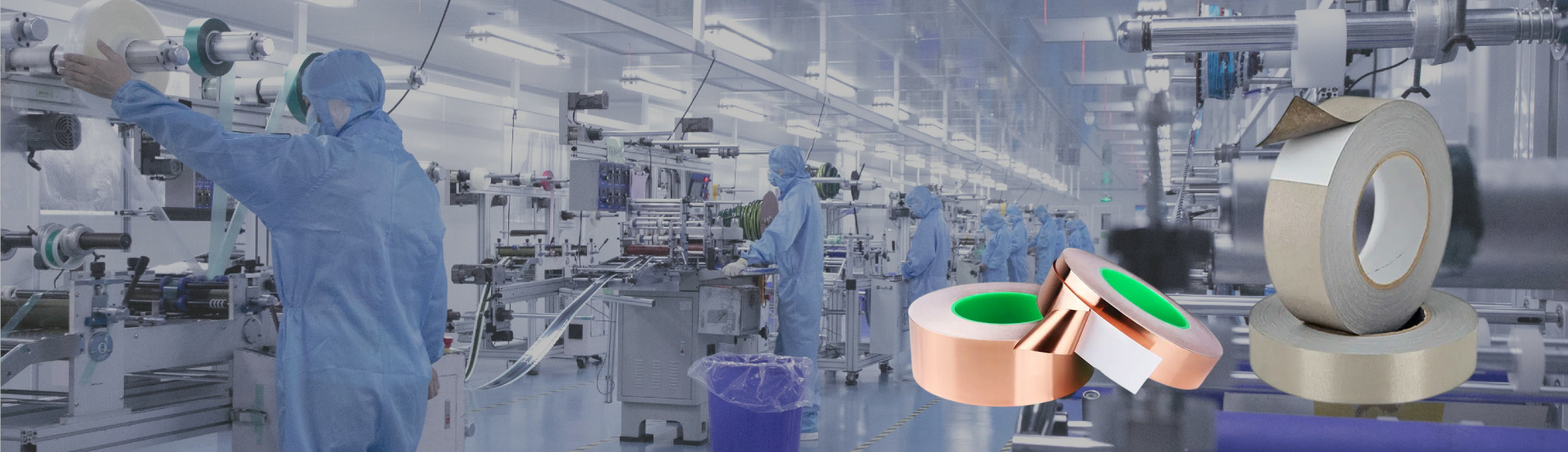
Our Electrically Conductive Tape production is conducted within a Class 1000 cleanroom, ensuring contamination-free manufacturing critical for electrical performance. We employ automatic roll-to-roll lamination machines that enable precise bonding of conductive layers with adhesive substrates, ensuring uniform conductivity and strong adhesion.

Automatic lamination waste removal machines improve production efficiency by eliminating excess material, resulting in clean, precise tape edges. This precision is essential for electrically conductive tapes used in EMI shielding, grounding, and electrical connectivity applications.

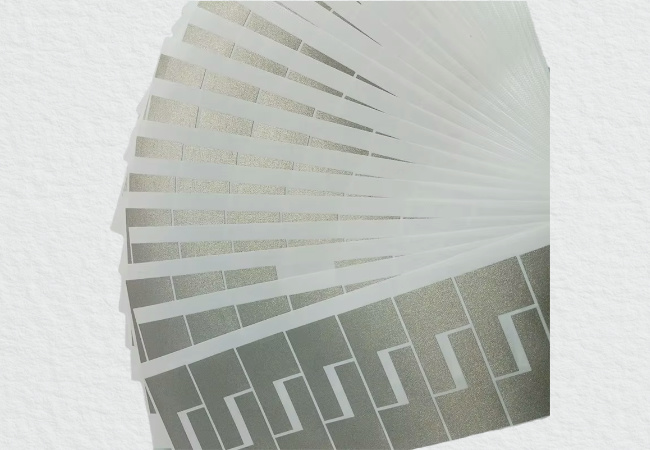
Our high-precision die-cutting machines handle complex designs with tolerances as tight as ±0.01mm, delivering components that fit exact specifications. Coupled with the cleanroom environment, this ensures consistent quality and performance required by electronics and industrial clients.
Our Die-Cutting Quality Control

We maintain stringent quality controls using advanced inspection equipment. Dimensional accuracy is verified with 2.5D measurement tools, while dust particle counters maintain cleanroom air purity. Microscopic defect detection is performed with binocular and CCD microscopes to ensure flawless surfaces and adhesive layers.

Peel testers confirm strong bonding between conductive layers and substrates, while thickness gauges monitor consistent material thickness. Tape holding power tests validate durability, and environmental chambers simulate temperature and humidity stresses to ensure long-term reliability.

In-process quality control (IPQC) stations provide continuous monitoring during production, allowing rapid detection and correction of any issues. Our training inspection areas ensure operators maintain high proficiency in defect identification and measurement. DC low resistance testers verify the electrical conductivity of the tape, ensuring performance meets client requirements.
Our Inspection Team

Our inspection team operates in the Class 1000 cleanroom to perform final checks on all Electrically Conductive Tape products prior to shipment. This final verification guarantees compliance with stringent dimensional, electrical, and cleanliness standards, protecting customer assembly processes and end-use reliability.
Our Mold Management

The mold workshop supports Electrically Conductive Tape production with CAD-driven custom mold design and manufacturing. CNC machining and laser cutting enable precise, repeatable molds for complex geometries. Mold maintenance programs ensure longevity and consistent die-cut quality.
Our Product Cases

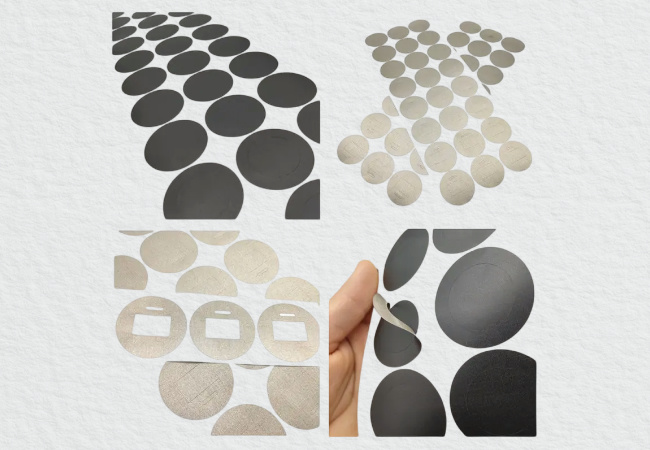
One example is our dust-proof mesh and gasket rings used in smartphones, earphones, and tablets. These parts keep dust out of speaker and microphone openings without affecting sound quality. Made in a cleanroom environment from breathable mesh or precisely cut gaskets, they maintain very tight dimensional tolerances and undergo strict breathability testing. This helps improve device durability and keeps audio clear and consistent.

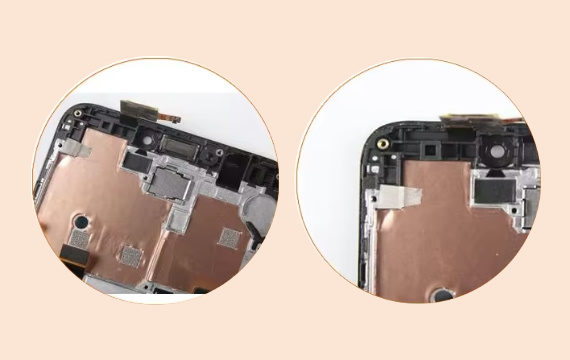
Another case is our camera foam gaskets designed for smartphone camera modules. These foam seals block dust and prevent light leaks that can affect photo quality. We use automated lamination to ensure perfect adhesion and advanced die-cutting to produce complex shapes accurately. Adhesion strength is tested carefully, which helps reduce defects and improves camera performance overall.

The third case covers PET and PC sheets with protective films. These are used for screen protectors, insulation, scratch resistance, or as substrates for flexible circuits. We ensure precise dimensions with advanced measuring tools and check surfaces with high-resolution microscopes. The materials also undergo durability testing to make sure they hold up well in different environments, supporting a variety of applications.
Contact us to customize your Electrically Conductive Tape solutions!

Electrically Conductive Tapes are special tapes designed to conduct electricity.
They are made from a conductive backing material and adhesive, allowing them to handle tasks like grounding, shielding against electromagnetic interference (EMI), and protecting against static discharge (ESD).
These tapes are commonly used in industries like automotive, aerospace, defence, medical, and telecommunications.
They can transfer electrical signals in devices and are compatible with materials such as foam, fabric, aluminium, or copper to suit different needs.
Electrically Conductive Tapes perform well under tough conditions, maintaining strong adhesion and conductivity.
They are durable, resist tearing, and are easy to integrate into production processes.
We specialise in die-cutting services for materials like conductive tapes, tailored to your specific application needs.

Electrically conductive tape works by using conductive materials that allow electric current to pass through. Here’s a simplified explanation:
The tape has a conductive layer, often made of materials like copper, aluminium, or conductive carbon. This layer creates a path for electricity. The adhesive used is also conductive, enabling the tape to form an electrical connection when applied to surfaces.
It helps in shielding against electromagnetic interference (EMI) by directing unwanted currents to the ground. It can also provide grounding for parts, protect sensitive components from static electricity (ESD), and even transfer electrical signals in specific setups.
To ensure proper function, the surfaces it sticks to should be clean and smooth for good electrical contact. Environmental factors like humidity or temperature changes can affect its performance.
We offer die-cutting services for custom conductive tape solutions to suit your needs.

Electrically conductive tapes come in various types, each designed for specific uses. Here’s a simple breakdown:
Single-Sided Conductive Tape uses a conductive material on one side for grounding or shielding, making it great for light and flexible needs like display assembly.
Double-Sided Conductive Tape has conductive adhesive on both sides to connect two surfaces. It’s ideal for tasks like bonding and grounding in electronics.
Shielding Conductive Tape blocks electromagnetic interference (EMI) and ensures clean signals by redirecting interference to the ground.
Conductive Foam Tape combines conductivity with cushioning, offering vibration resistance and gap filling in electronics.
Heat-Activated Conductive Tape activates at high temperatures for strong bonds and excellent conductivity in challenging conditions.
Copper Foil Tape is highly conductive and perfect for shielding and static prevention, often used in sensitive electronics or temperature insulation.
Non-Woven Conductive Tape and Conductive Fabric Tape are flexible and easy to cut, making them practical for grounding and shielding tasks.
We offer tailored die-cutting solutions for all these types, ensuring the tape fits perfectly for your specific needs.

According to many years of experience in die-cutting materials. when choosing conductive tape for your electronics, there are a few key points to keep in mind:
- Conductivity Needs: Match the tape’s conductivity to your product’s requirements. For high-conductivity demands, consider tapes with silver or copper fillers.
- Adhesion And Shielding: If you need both sticking power and shielding, dual-sided conductive tapes like tesa® ECT 6025x/6026x series can be a good choice.
- Durability: For tough environments, opt for tapes with strong environmental stability, such as 3M conductive tapes, which are reliable under challenging conditions.
- Flexibility And Thickness: Thin, flexible tapes work well in compact designs. Choose a thickness that suits your space and application.
- Ease Of Use: Pick tapes that are easy to cut and fit into automated assembly processes, such as 3M-9703 Z-axis conductive tape.
- Special Features: For unique needs like Z-axis conductivity, specific tapes designed for this purpose are ideal.
- Cost: Balance performance and budget. High-performance tapes may cost more but can be essential for demanding tasks.
- Supplier Support: Work with a supplier offering technical assistance and customisation options to meet your specific needs.
- Compliance: Ensure the tape meets safety and regulatory standards like RoHS.
- Testing: Always test before finalising to ensure the tape performs as required in real-world use.

The electrical performance of conductive tape depends on a few key factors:
The conductive particles inside the tape, such as silver, copper, or graphite, create its conductivity. The size and shape of these particles also affect how well the tape conducts electricity.
The way these particles form pathways is essential. When pressed together, they create channels that allow electricity to flow.
The resin holding the particles together plays a role too. For example, epoxy resins are popular because they’re strong and can cure at lower temperatures.
Environmental factors like temperature and humidity can impact performance, so the tape should be tested under the conditions where it will be used.