

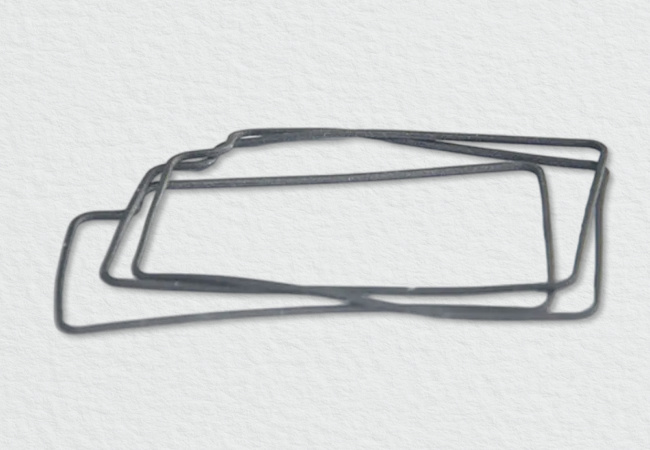
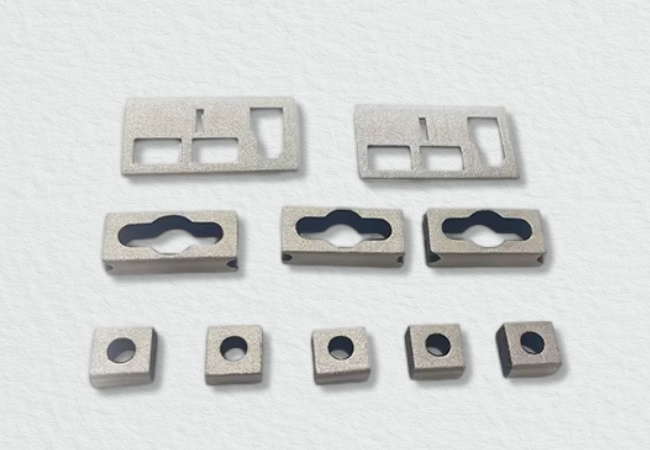
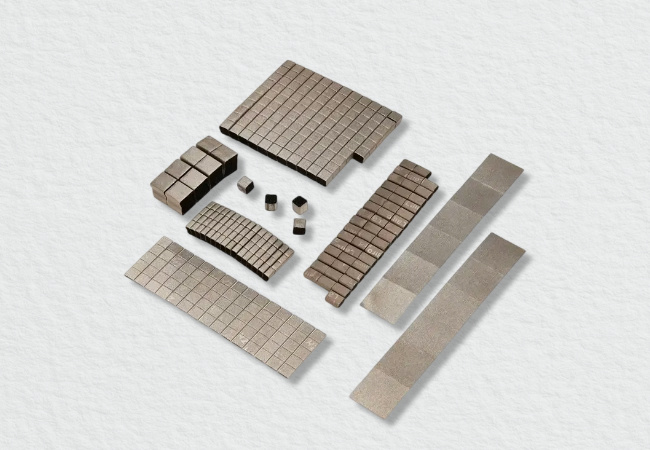
Quality Die-Cutting EMI Shielding Foam Manufacturing
- Custom EMI Shielding Foam For Die-Cutting.
- IATF 16949:2016 Certification
- Over 20 years of Die Cutting experience
- Various materials available
- Product Details
- Application Overview
- Material Insights
- EMI Shielding Foam blocks signals really well, keeping devices safe from interference.
- The material stays in shape over time, ensuring long-lasting performance.
- It resists rust and wear, working well in different environments.
- It’s fire-safe and eco-friendly, meeting important safety and environmental standards.
- Approved for green standards like RoHS, making it safe for the environment.
ODT provides die-cutting services for the following areas:
- Automotive Electronics: EMI foam is used for shielding and grounding seams and holes, offering excellent conductivity and shielding in automotive electronics.
- Aerospace: EMI foam helps reduce electromagnetic wave propagation and provides structural support, thanks to its lightweight nature.
- Portable Electronics: In smartphones and tablets, EMI foam shields and absorbs microwaves, helping devices stay lightweight and compact.
- Military and Security: Used in military communications, EMI foam protects sensitive systems from electromagnetic interference, ensuring reliable operation.
- Construction: EMI foam is applied in walls and roofs to shield buildings from external electromagnetic waves, improving internal environments.
- Medical Devices: EMI foam protects sensitive medical equipment, like MRI and CT scanners, from electromagnetic interference, ensuring their proper functioning.
- Industrial Equipment: In industrial automation, EMI foam reduces interference between devices, enhancing system stability and reliability.
- Consumer Electronics: Used in TVs, speakers, and home appliances, EMI foam helps prevent electromagnetic leakage and shields users from radiation.
We recommends the following commonly used die-cutting materials for EMI Shielding Foam:
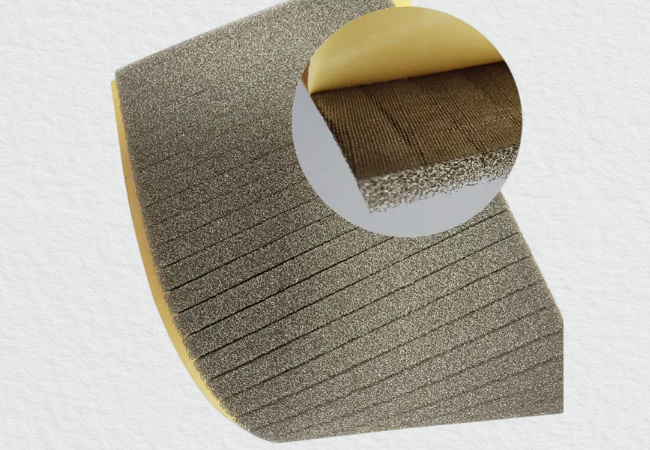
- Open-Cell Polyurethane Foam: This foam, ranging from 0.5mm to 16mm in thickness, is treated with copper-nickel for better conductivity and corrosion resistance.
- Conductive Fillers: High-conductivity particles like silver-coated aluminium or pure nickel are added to improve EMI shielding and environmental sealing.
- Metal Materials: Metals such as beryllium copper and stainless steel are used directly for electromagnetic shielding.
- Filler Materials: Conductive fillers like metal powders and fibres are added to non-conductive bases to make the material conductive.
- Surface Coatings and Conductive Paints: Electroplating and other methods apply metal coatings to improve conductivity.
- Conductive Rubber: Rubber filled with metal particles provides excellent shielding, conductivity, and moisture protection.
- Conductive Fabrics: Fabrics, often polyester, are coated with metal to create conductive materials for EMI shielding.
- Special Absorbing Materials: Materials like BandSorb® are used for noise reduction in tight spaces, effective for frequencies between 5 MHz to 40 GHz.

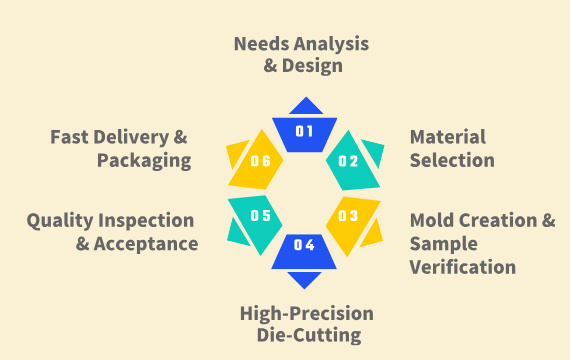
Custom Die-Cutting with EMI Shielding Foam
We specialise in customised die-cutting solutions tailored to your specific needs. Whether for automotive electronics, security systems, or other industries, we provide high-precision services to ensure your product requirements are met. We offer a wide selection of materials, including EMI Shielding Foam, which effectively protects against electromagnetic interference.
Our services include personalised design, accurate cutting, and fast delivery, suitable for both small and large production runs. With ODT, you can enhance product quality, reduce costs, and speed up time to market. Let us help you stay ahead with our expert solutions.
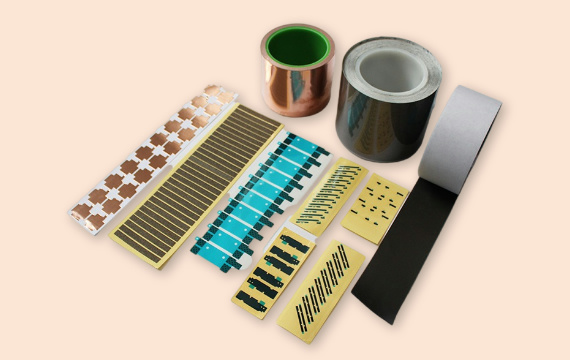
Comprehensive Die Cutting Materials Collection
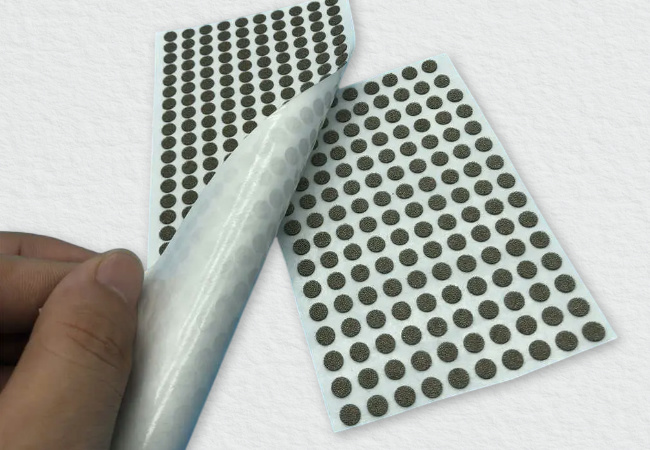
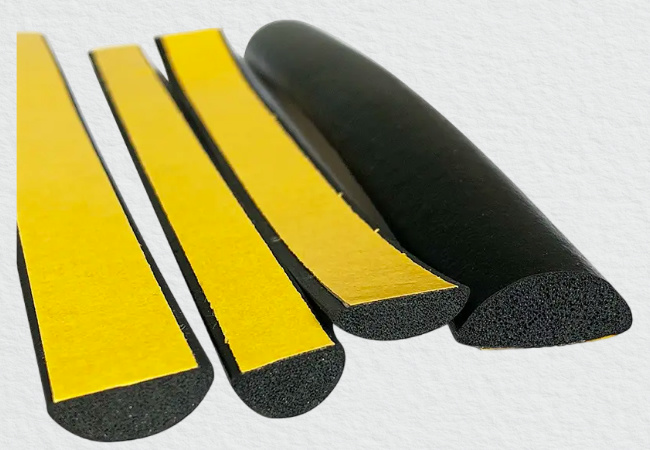
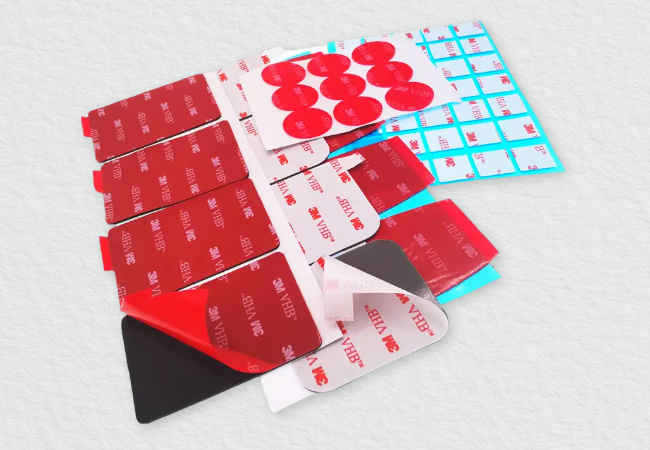
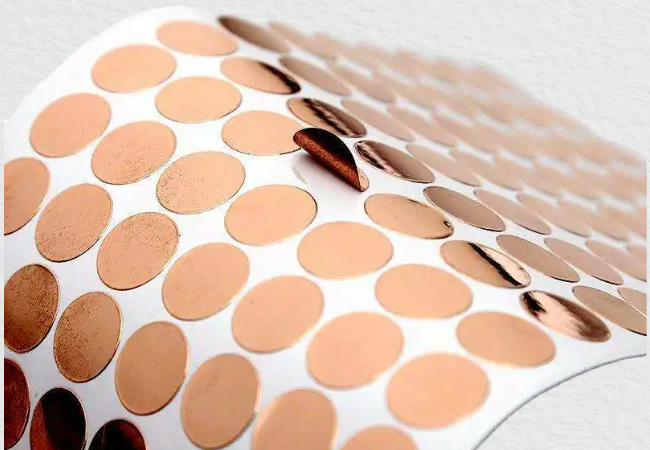
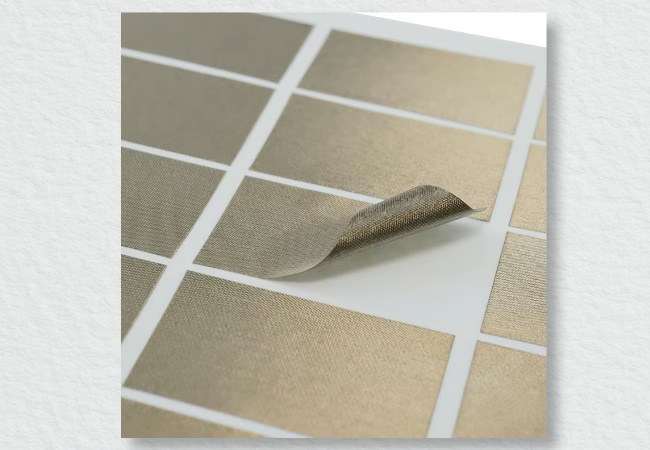
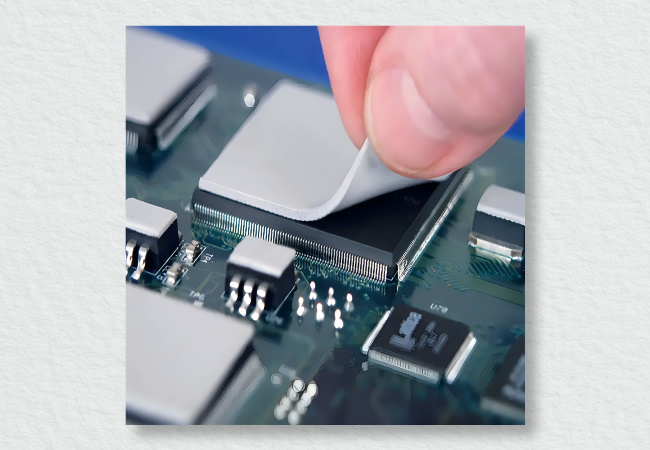
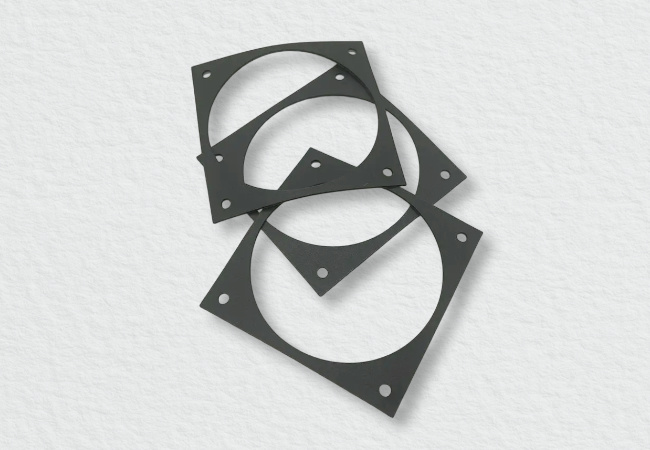
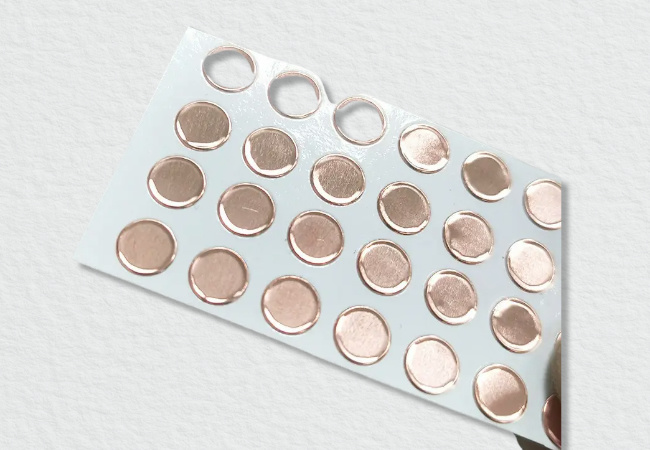
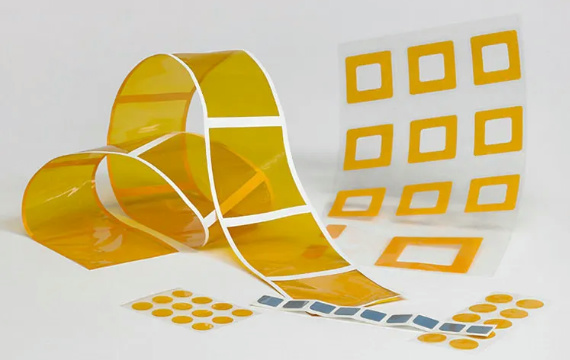
EMI Shielding Foam – Our Precision Die-Cutting Solutions
Our Die-Cutting Equipment
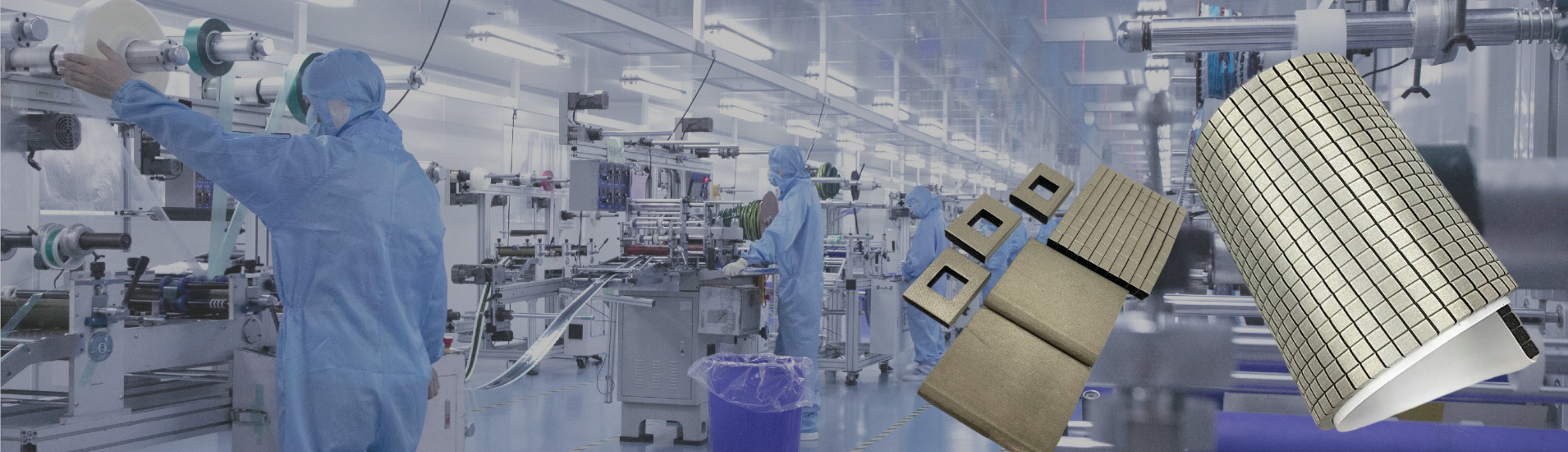
Our advanced die-cutting facility is located in a Class 1000 cleanroom, ensuring every EMI Shielding Foam component is produced in a controlled, contamination-free environment. We utilize automatic roll-to-roll lamination machines to achieve high-efficiency bonding of foam with conductive materials. This precise lamination is essential for maintaining electrical conductivity and shielding performance, especially in sensitive electronic devices.

To streamline waste removal and increase productivity, we employ automatic lamination waste removal machines. This automation ensures clean edges and accurate shapes, eliminating human error and improving throughput for high-volume EMI foam production. The process also reduces material waste, aligning with our sustainability goals.

Our die-cutting machines—the core of our operation—support multiple mold designs and can execute intricate patterns with a tolerance of ±0.01mm. This capability is vital for EMI foam parts that must fit perfectly into compact device assemblies, from smartphones to industrial electronics. Combined with our cleanroom environment, these machines ensure exceptional dimensional accuracy and product consistency.
Our Die-Cutting Quality Control

To guarantee the performance and precision of every EMI Shielding Foam piece, we rely on a comprehensive set of testing and inspection tools. Our 2.5D measuring instruments verify dimensional accuracy, while dust particle counters ensure our cleanroom maintains the required air purity. For microscopic surface defect checks, we use both binocular microscopes and CCD microscopes, capturing details invisible to the naked eye.

Material properties are tested with peel testers to assess adhesive strength, and thickness gauges to maintain uniform foam thickness. Light transmission testers and tape holding power testers further validate that the EMI foam meets both functional and mechanical requirements. To simulate real-world environments, we employ constant temperature and humidity chambers, ensuring long-term durability under extreme conditions.

Our quality control extends to the production floor, where IPQC stations conduct in-process checks using 2.5D measurement systems. Additional inspection zones in the training workshop ensure staff maintain high skill levels in defect identification and measurement accuracy. For electrical performance, our DC low resistance testers confirm the conductivity of EMI foam, guaranteeing its shielding capability in actual applications.
Our Inspection Team

Located within the Class 1000 cleanroom, our dedicated inspection team performs final verification on every batch of EMI Shielding Foam before shipment. Using precision instruments, they ensure zero defects, consistent performance, and full compliance with client specifications. This final quality gate protects our customers from assembly delays, product recalls, or shielding failures.
Our Mold Management

Our in-house mold workshop designs, manufactures, and maintains custom molds tailored to each EMI Shielding Foam project. Using CAD software for precision design, CNC and laser cutting for manufacturing, and strict lifecycle management for storage and maintenance, we ensure molds remain in peak condition. This guarantees repeatable quality and fast lead times, even for complex foam geometries.
Our Product Cases

For EMI Shielding Foam in acoustic applications, such as earphones, smartphones, or tablets, we produce dust-proof gaskets that also maintain sound transmission quality. Using high-breathability conductive foam, our precision die-cutting achieves tight tolerances, while cleanroom production prevents particle contamination. This results in devices with improved durability and stable audio performance.

In camera module applications, our high-density conductive foam gaskets block dust ingress and prevent light leakage, enhancing photo quality. Automated lamination ensures bonding precision, while advanced die-cutting machines create complex shapes for multi-lens configurations. Peel testing verifies adhesion strength, ensuring long-term reliability in consumer electronics.

For structural or protective uses, we provide PET or PC films laminated with conductive foam, serving as insulation, anti-scratch layers, or FPC support. Dimensional accuracy is maintained with 2.5D measurement, surface perfection is confirmed by CCD microscopes, and environmental resistance is tested in climate chambers. This versatility makes our EMI foam suitable for multiple electronic manufacturing needs, from shielding to mechanical protection.
Contact us to customize your EMI Shielding Foam solutions!
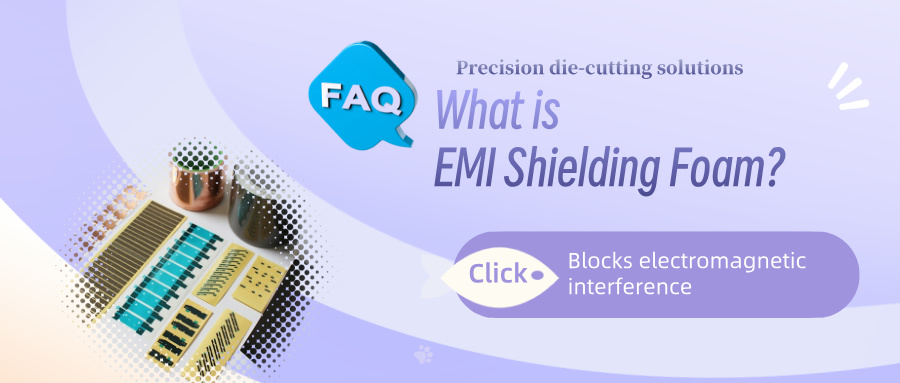
EMI Shielding Foam is a material designed specifically to block electromagnetic interference (EMI). It plays a key role in ensuring electronic devices work properly without being disrupted by external signals. The following are common EMI Shielding Foam:
Fabric-Over-Foam (FoF)
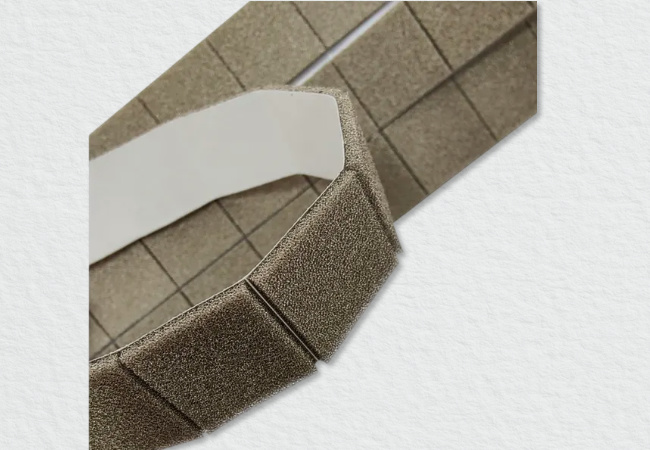
This versatile material combines conductive fabric, conductive foam, copper foil, and pressure-sensitive adhesive. It’s widely used in mobile phones and similar devices where conductivity and strong bonding are both essential.
Conductive Foam Pads
These pads, made by coating or impregnating foam with conductive materials, are flexible and compressible. They are perfect for sealing gaps and preventing EMI and radio frequency interference (RFI).
X-Y-Z Conductive Foam
This foam provides conductivity in all directions and is a cost-effective solution for shielding applications requiring comprehensive electrical performance.
Fabric Over Foam Gaskets
Combining soft fabric with conductive materials, these gaskets achieve excellent shielding performance of up to 100 dB with very low surface resistance, making them ideal for demanding shielding tasks.
Each of these variations showcases the adaptability of EMI Shielding Foam to different needs. We specialise in die-cutting services that meet the precise requirements of such advanced shielding materials.
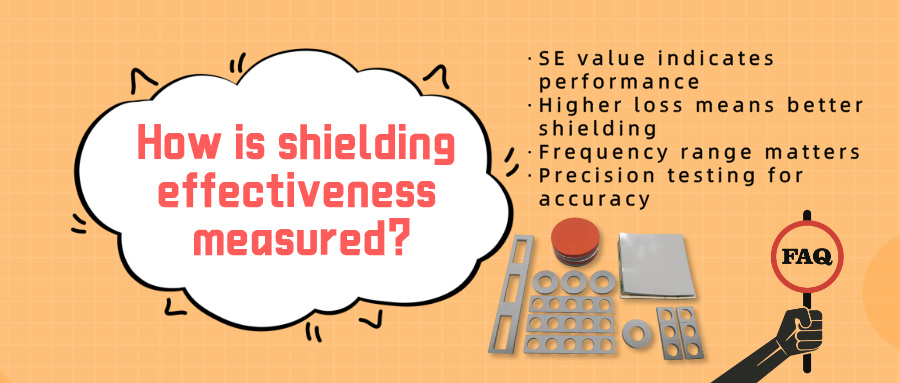
When assessing the shielding effectiveness of EMI (Electromagnetic Interference) Shielding Foam, a few important factors are considered:
Shielding Effectiveness (SE) is the main indicator, usually measured in decibels (dB). The higher the SE value, the better the material’s shielding performance. To put it simply: SE < 10 dB means poor performance, 10-30 dB is fair, 30-60 dB is average, 60-90 dB is good, and over 90 dB is excellent.
Reflection Loss (R) refers to the energy lost when electromagnetic waves bounce off the foam’s surface. The higher the loss, the better the shielding. This can be calculated using a formula that takes into account the material’s reflectivity.
Transmission Loss (T) measures the energy lost as electromagnetic waves pass through the material. The greater the loss, the better the material at blocking interference. This is calculated using the material’s transmission rate.
Absorption Loss (A) is the energy lost when the foam absorbs the electromagnetic waves. This is also an important factor in determining the material’s overall shielding effectiveness.
The frequency range of the test is crucial because the foam’s shielding ability can vary at different frequencies. It’s usually tested from low to high frequencies to see how it performs across the spectrum.
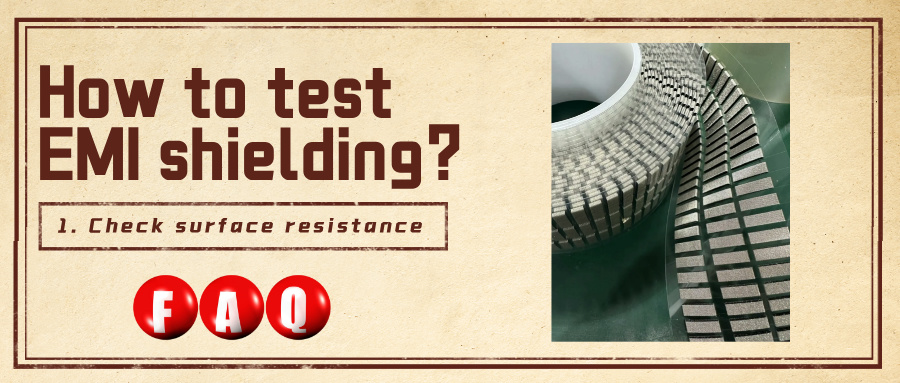
Other material characteristics such as conductivity, thickness, surface resistance, and vertical resistance also affect how well the foam shields against interference. For example, combining conductive sponges with copper foil can improve performance.
Advanced testing techniques such as ion beam spectroscopy, electron microscopes, and various types of probes help accurately measure the material’s shielding effectiveness.
Lastly, network analysis using tools like Vector Network Analyzers (VNA) allows for precise measurements of reflection and transmission shielding efficiency, further helping to determine the material’s suitability for different applications.
At ODT, we offer die-cutting services, and with over 22 years of experience, we have helped brands like Apple, Samsung, and Foxconn enhance their products with high-quality die-cut materials.
To ensure the long-term stability of EMI Shielding Foam’s performance, a few methods can be applied.
One way is by using ultra-stable films made from conductive metal-organic frameworks (cMOFs). These materials can maintain high shielding effectiveness (SE), even after long-term exposure, high temperatures, repeated bending, or even immersion in artificial seawater.
Another approach involves improving heat stability. Adding reduced graphene oxide (rGO) to polyimide (PI) foam boosts its thermal stability, making the foam’s EMI shielding effectiveness more reliable over time. In fact, the temperature at which the foam loses 5% of its weight rises significantly with the addition of rGO.
Optimising the foam or film structure is also crucial. Introducing foam structures in the absorbing layer helps adjust impedance matching, reducing the reflection of electromagnetic waves on the surface. Additionally, the foam’s microstructure creates multiple scattering points, increasing the path length of the waves and improving their attenuation.
Lastly, natural antioxidants like melatonin and tea polyphenols can be used to protect materials such as Ti3C2Tx MXene from degradation, further improving the stability of the shielding performance.
We provide die-cutting services that can help tailor materials to your specific needs, ensuring high-quality, reliable solutions.
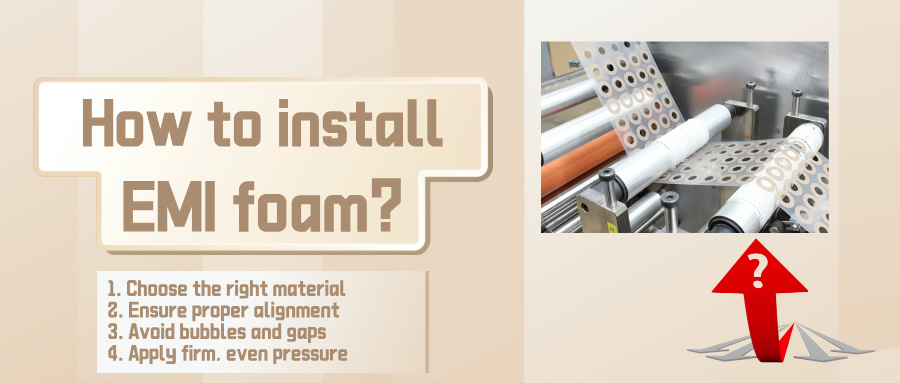
To correctly install and use ODT EMI shielding foam in electronic devices, start by choosing the right material and thickness based on your device’s needs. Check that the foam fits well with the specific parts of your device to ensure optimal shielding.
If you’re using it on signal wires, confirm the type of wires and interfaces to make sure everything matches, including the polarity. Handle the foam carefully to avoid scratches or damage during installation.
For multiple foam pieces on the same cable, arrange them with enough space to prevent interference. After installation, double-check that all connections are secure and stable.
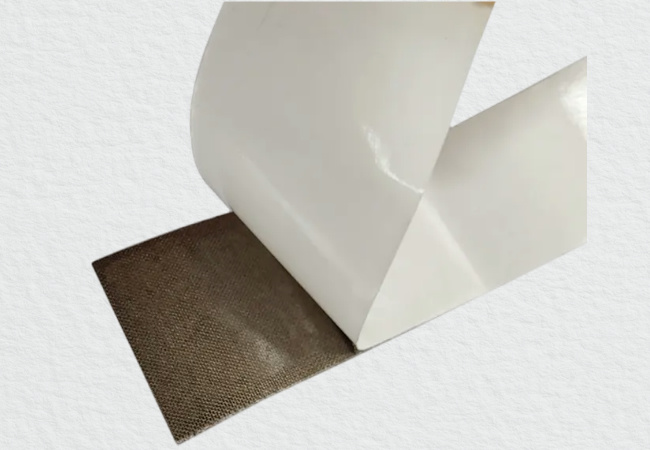
Before applying the foam, clean the surfaces to ensure good contact. When removing protective film, peel one side carefully, align the foam, and press down gently to avoid bubbles. If bubbles do appear, smooth them out carefully without damaging the foam.
Apply some pressure to secure the foam firmly and leave it for a while to settle.
Following these steps ensures the foam works effectively to reduce interference. At ODT, we can provide tailored die-cutting services to perfectly fit your shielding requirements.