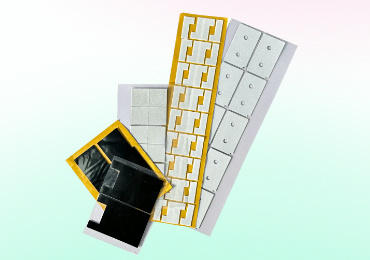
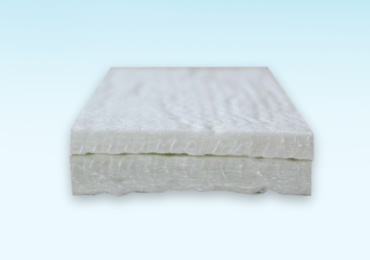
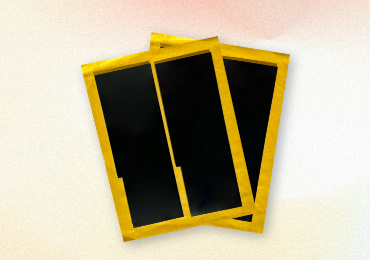
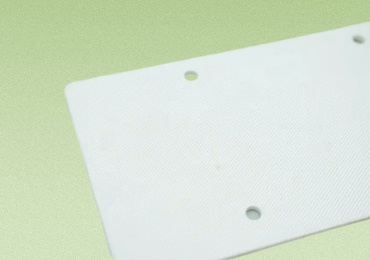
Mylar Sheet – Our Precision Die-Cutting Solutions
Our Die-Cutting Equipment

Our Mylar Sheet products are manufactured within a Class 1000 cleanroom, ensuring absolute cleanliness and precision. The automatic roll-to-roll lamination machines apply adhesive layers or protective coatings to the Mylar with flawless alignment, maintaining its surface integrity and optical clarity.

The automatic lamination waste removal system efficiently strips excess material without scratching or distorting the Mylar sheets, which is crucial for applications requiring pristine surfaces and exact dimensions. This process also shortens lead times for large-scale production runs.

High-precision die-cutting machines handle complex shapes with tolerances as tight as ±0.01mm, enabling the Mylar Sheet to be tailored for electronics insulation, graphic overlays, and other high-spec applications.
Our Die-Cutting Quality Control

Dimensional accuracy is verified using our 2.5D measurement instruments, while dust particle counters ensure the cleanroom environment meets strict contamination standards. CCD and binocular microscopes detect micro flaws, ensuring a flawless final product.

Peel strength testers check adhesive bonding reliability, thickness gauges confirm uniformity, and environmental chambers test the Mylar Sheet’s resistance to temperature and humidity extremes. Light transmission testing is conducted where optical performance is required.

In-process quality control (IPQC) uses advanced precision tools for real-time monitoring, while holding power testers validate long-term adhesive stability in demanding applications. Specialized tests are added when customer specifications require them.
Our Inspection Team

In the Class 1000 cleanroom, our dedicated inspection team performs comprehensive final checks on every batch of Mylar Sheet products, ensuring perfect dimensions, surface quality, and functional performance before delivery.
Our Mold Management

Our in-house mold workshop designs and manufactures custom cutting dies using CAD software, CNC machines, and laser technology. Each mold is maintained and tracked for lifespan, ensuring consistent cutting precision for Mylar Sheet production.
Our Product Cases

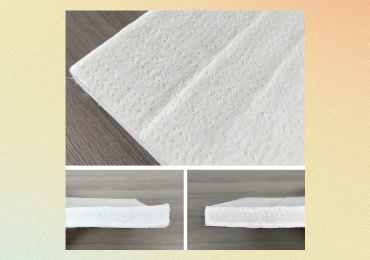
One example is the dust-proof mesh and gasket rings used in smartphones, earphones, and tablets to block dust while maintaining audio quality. Produced in a controlled cleanroom with precision die-cutting, these parts meet strict airflow and size specifications.

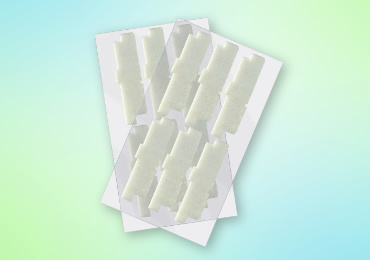
Another case is foam gaskets for smartphone camera modules, designed to prevent dust entry and light leakage. Automated lamination ensures precise adhesive application, and advanced die-cutting achieves complex shapes consistently.

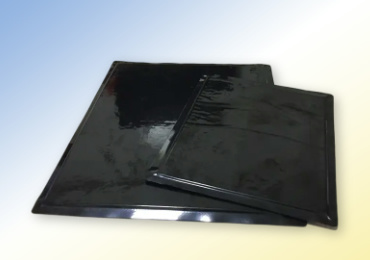
The third example is PET or PC sheets with protective films, used in screen protection, insulation layers, and anti-scratch applications. Each piece undergoes strict dimensional checks, surface inspection, and environmental durability tests.
Contact us to customize your Mylar Sheet solutions!
Is Mylar sheet fire resistant?
Yes, Mylar sheet — especially the insulating type — is fire resistant. It meets a safety standard called UL94 V0, which is one of the highest fire ratings for plastics.
What does that mean?
It means if the Mylar catches fire, it will stop burning quickly once the flame is removed. Also, it won’t drip burning material, which helps prevent further damage or spread of fire.
This makes Mylar a safe choice for electrical insulation, electronics, and other applications where fire risk needs to be reduced.
At ODT, our Mylar films are tested to meet this standard, so you can use them with confidence in projects where fire safety matters.
If you’re not sure whether UL94 V0 is enough for your use case, we’re happy to help you choose the right material.
How strong is Mylar against electricity?
Mylar is very good at resisting electricity. It has high dielectric strength, which means it can stop electricity from passing through.
For example:
A normal Mylar sheet can handle up to 7000 volts per millimetre.
If the sheet is 250 microns thick, it can block up to 23,000 volts before breaking down.
Even at high temperatures (up to 150°C), it still works well and keeps its electrical strength.
Because of this, Mylar is widely used to insulate wires, batteries, transformers, and other electrical parts. It helps prevent short circuits and keeps things safe.
If you need a material that’s thin but strong against electricity, Mylar is a great choice.
Can Mylar sheet be used with thermal glue?
Yes, it can. Insulating Mylar Sheet has low heat transfer ability by itself — its thermal conductivity is about 0.159 W/m·K, which means it doesn’t move heat very well. But when it’s combined with thermal glue, it can help manage heat better.
Thermal glue usually has a much higher conductivity, between 1.0 and 8.0 W/m·K, and it’s good at moving heat away from hot parts like batteries or chips. By using both together, you get good insulation from the Mylar and strong heat transfer from the glue.
This combo is common in things like new energy batteries, where it’s important to keep everything cool but still safe from electricity. Just make sure to pick the right glue and apply it properly, so both materials work well together.
How to prevent Insulating Mylar Sheet failing during battery thermal runaway?
To prevent Insulating Mylar Sheet from failing when a battery overheats, we need to control heat and improve the design.
Use better materials – Choose Mylar with high heat resistance (up to 180°C). Adding ceramic coating can also raise the melting point and stop early failure.
Design safer battery cells – Add safety valves and thermal sensors inside the cell. These help control pressure and heat during overload.
Improve insulation – Place heat-blocking materials like mica or flame-retardant foam between cells and modules.
Use cooling systems – Liquid or air cooling can help move heat away. Some batteries also use phase change materials to absorb extra heat.
Upgrade insulation design – Add PET film, mica paper, or ceramic-coated layers between hot parts and metal parts to stop short circuits.
By combining these steps, you can keep the Mylar sheet strong and the battery safe, even in high-heat situations.
Is Insulating Mylar Sheet suitable for solid-state batteries?
Insulating Mylar Sheet works well in traditional lithium-ion batteries for insulation, but for solid-state batteries, it has limitations.
Voltage and Temperature Requirements – Solid-state batteries need insulation materials that can handle higher voltages (3000–4000V) and temperatures over 150°C. Mylar’s usual breakdown voltage is around 2500V, which might not meet these needs.
Interface Stability – Solid-state batteries use sensitive materials like sulfides that need to be sealed carefully. Mylar may not offer the necessary chemical compatibility or sealing properties.
New Alternatives – New materials like UV-cured coatings and PI films are becoming more popular for solid-state batteries. They have better voltage resistance and work well with electrolytes.
Conclusion – While Mylar can be used in low-pressure applications like traditional lithium-ion batteries, it’s not ideal for solid-state batteries due to its lower voltage and temperature tolerance. For solid-state batteries, consider newer insulation solutions. If Mylar is used, thorough testing for compatibility and performance is essential.