

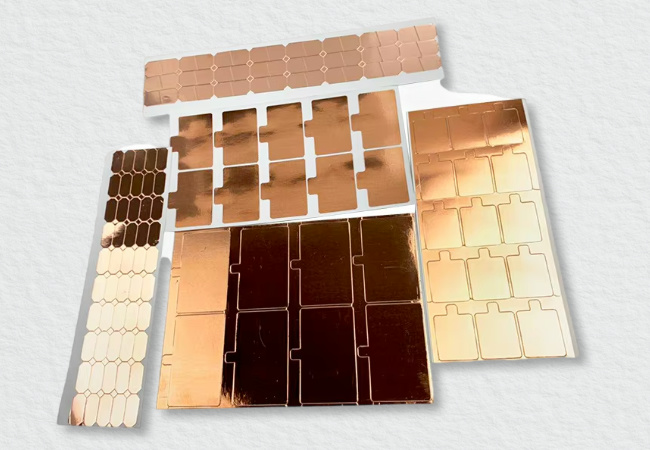
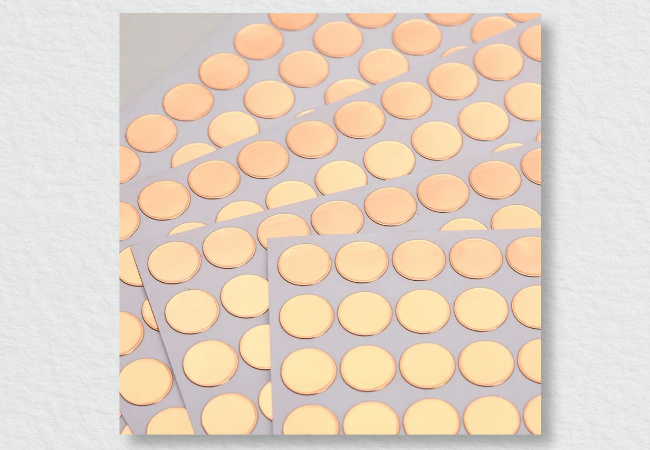
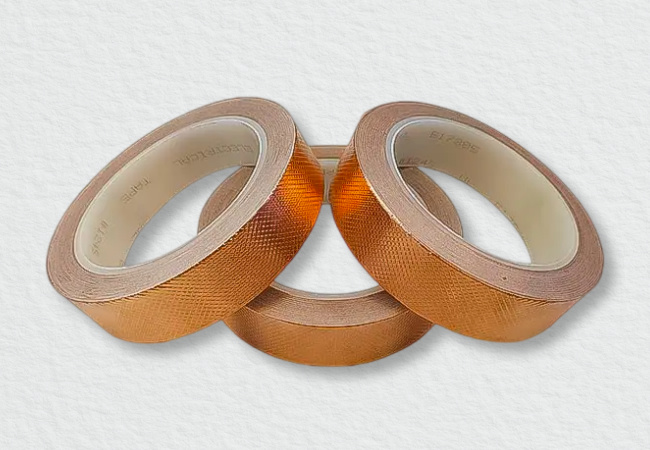
High Quality Die-Cutting RFI Shielding Tape
- Low MOQ From 300pcs to Support Your Business
- Expert in Die-Cutting RFI Shielding Tape Customization
- Fast Sample Production for Die-Cutting RFI Shielding Tape in Just 3 Days
- ISO14001 Certified
- Product Details
- Application Overview
- Material Insights
- RFI shielding tape reduces EMI and RFI, providing effective solutions for electrical and electronic components.
- The tape contains conductive adhesives to discharge static electricity and prevent dangerous static buildup effectively.
- Durable and corrosion-resistant, it withstands harsh conditions and offers non-flammable properties for added safety.
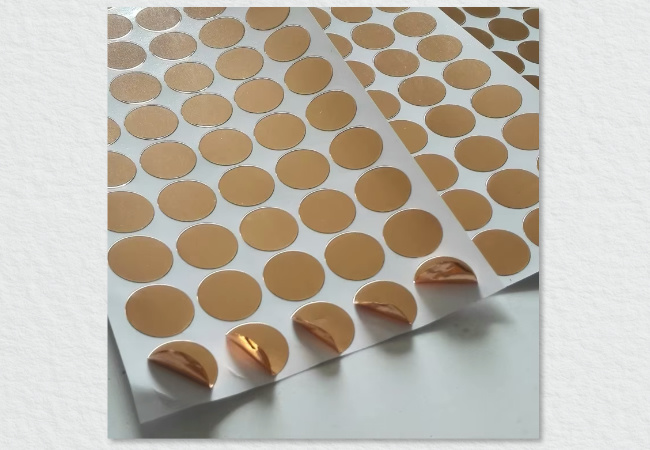
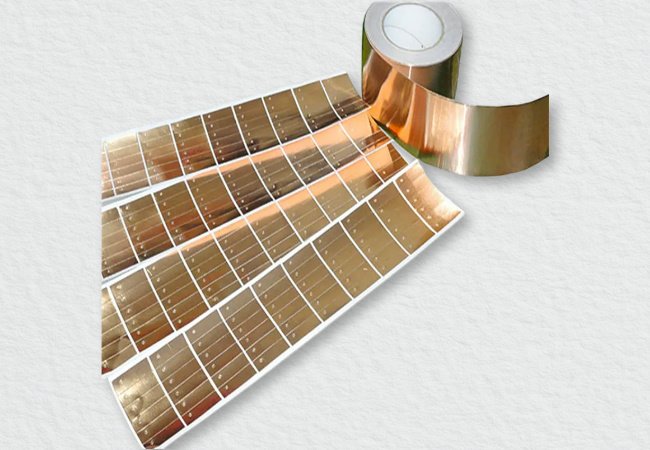
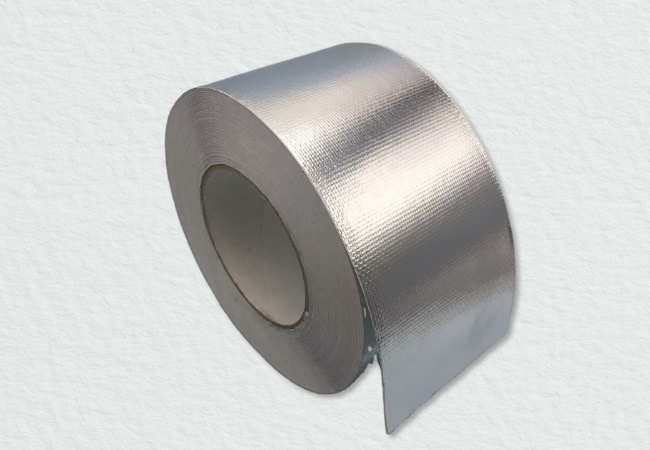
- Aluminum and copper foil tapes can be die-cut into custom shapes for precise product compatibility.
- These tapes meet RoHS standards, work in wide temperature ranges, and ensure excellent shielding performance.
We have provided die-cutting services for industries needing RFI Shielding Tape, such as telecommunications, automotive, and defence. This tape blocks harmful electromagnetic waves to protect sensitive electronics.
Telecommunication Equipment:
Used in base stations and servers to prevent external interference. It ensures stable and secure communication.
Automotive Industry:
Applied to control units, sensors, and infotainment systems. It reduces interference between in-car electronics, improving reliability.
Aerospace and Defence:
Used in avionics and military communication devices. It ensures accurate performance in critical systems by blocking interference.
Medical Devices:
Used in monitors and diagnostic tools to block external signals. This helps maintain precise readings and ensures patient safety.
Consumer Electronics:
Applied in smartphones, computers, and home appliances. It protects delicate components from interference, preventing faults.
Electronics Assembly and Repair:
Used on circuit boards to shield high-frequency signals. This ensures proper communication in WiFi, cellular, and RFID devices.
Shielded Rooms:
Used for sealing gaps in shielded enclosures. It blocks outside signals, protecting sensitive equipment from disruptions.
Electronic Components and Cables:
Wrapped around individual parts or wires for long-term protection. It maintains performance and reduces interference risks.
ODT, with extensive experience in die-cutting, provides an overview of the key features of RFI Shielding Tape and its benefits.
Conductivity:
The tape contains metal layers like copper or aluminium, which block electromagnetic and radio frequency interference effectively.
Structure Design:
It combines metallised fabrics (e.g., copper-nickel-coated polyester) with conductive adhesives, ensuring strong shielding and durable adhesion.
Surface Resistivity:
With low resistivity (0.03-0.05 Ω/lin.in.), it conducts static charges efficiently, reducing the risk of static build-up.
Shielding Performance:
It achieves high shielding levels, blocking electromagnetic waves across a wide frequency range (e.g., 69dB at 100MHz).
Temperature Resistance:
The tape performs well in extreme conditions, operating between -40˚F and 212˚F (-40˚C to 100˚C).
Flexibility and Compression:
Its flexibility allows it to conform to different shapes, ensuring a tight fit for reliable shielding.
Environmental Compliance:
Many variants meet RoHS standards, meaning they are free of harmful substances and recyclable.
Material Compatibility:
The tape adheres well to various surfaces like metals and plastics, making it suitable for diverse electronic applications.
Physical Design:
Flat or embossed designs optimise conductivity and block electromagnetic waves effectively.

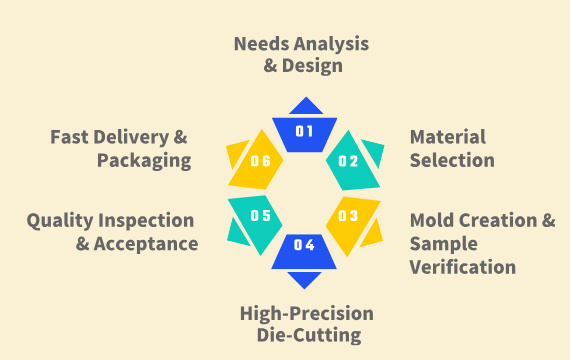
Precise Die-Cutting for RFI Shielding Tape
We offers tailored die-cutting solutions for RFI shielding tape, ensuring precision and quality for your electronic and security needs. With advanced cutting technology and a wide range of materials, we create customised designs to meet your exact requirements. Our services are ideal for both small and large-scale projects, helping you achieve top performance and faster delivery timelines.
Precise Die-Cutting Process for RFI Shielding Tape
We specialise in advanced die-cutting processes for RFI Shielding Tape, ensuring precision and performance for shielding applications. Using materials like conductive fabrics (copper or nickel-plated) with adhesive backings, we employ methods such as flatbed cutting for thin tapes and rotary cutting for larger designs, achieving accurate shapes tailored to your needs.
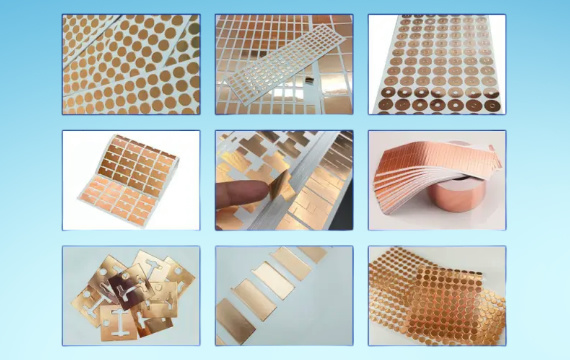
Discover More for Your Die Cutting Projects
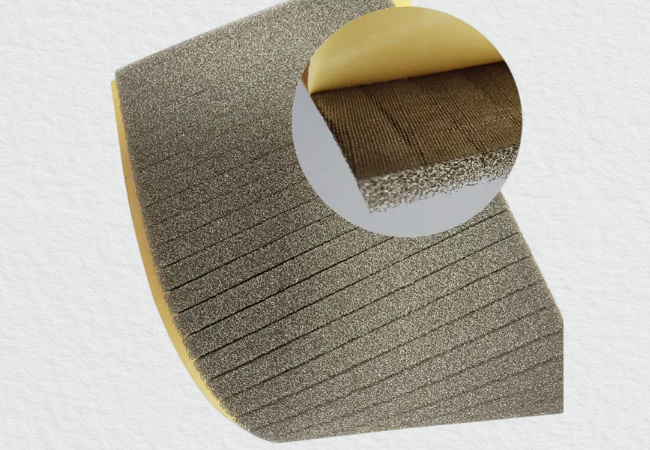
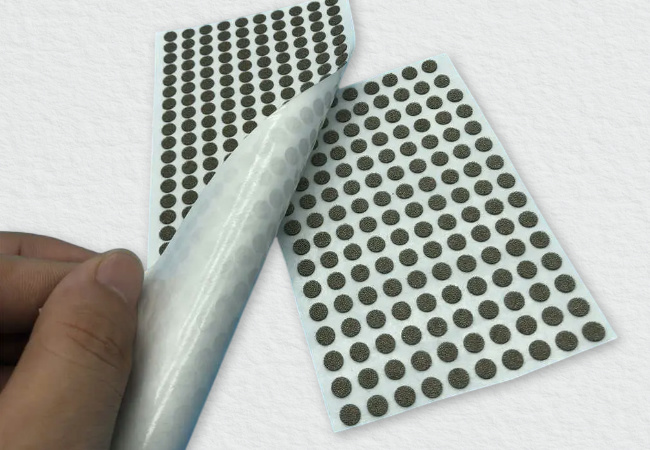
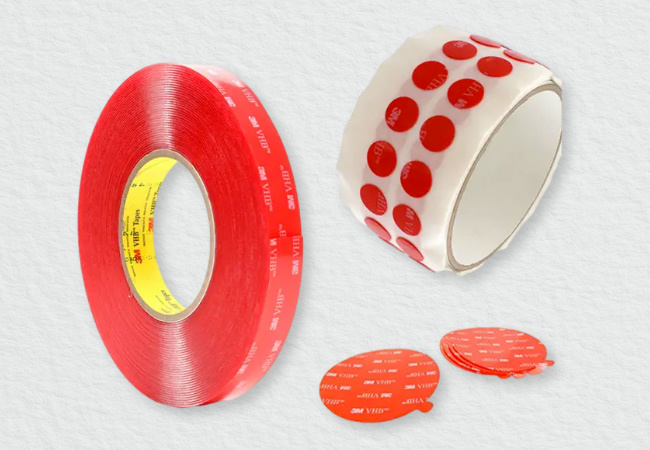
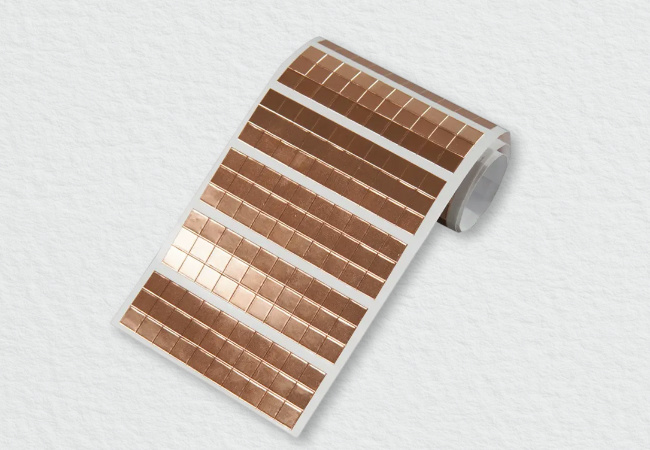
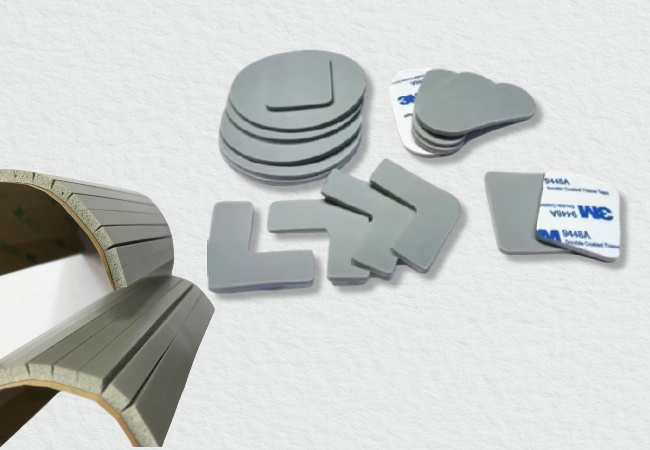
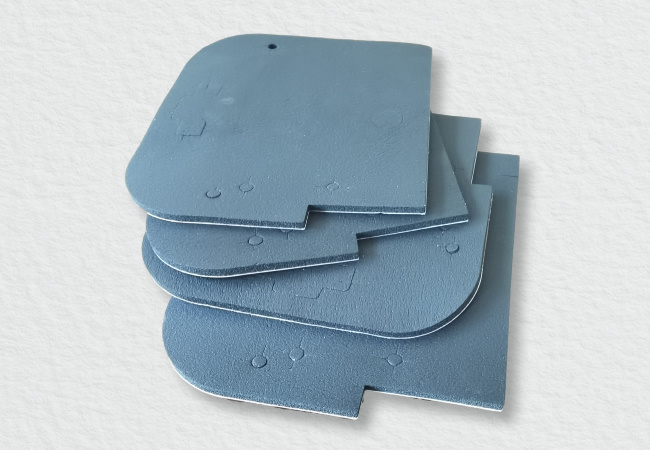
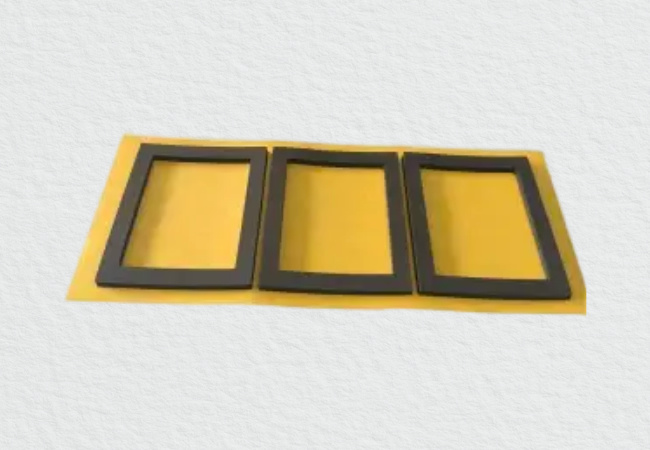

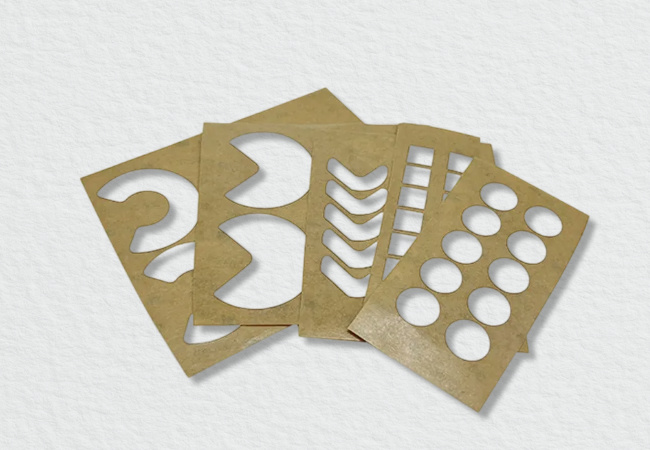
RFI Shielding Tape – Our Precision Die-Cutting Solutions
Our Die-Cutting Equipment

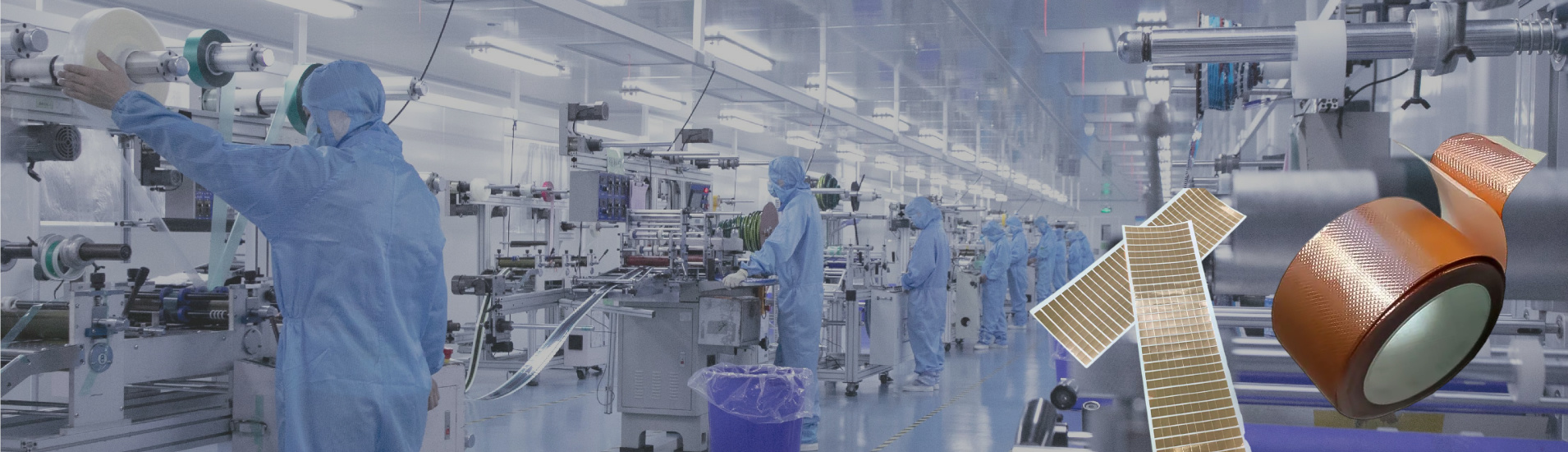
Our RFI Shielding Tape is produced within a Class 1000 cleanroom environment, ensuring a contaminant-free process essential for sensitive shielding materials. We use automatic roll-to-roll lamination machines to precisely bond conductive foils with adhesive layers, maintaining uniform thickness and strong adhesion critical for effective radio frequency interference protection.

The automatic lamination waste removal machine enhances production efficiency by automatically eliminating scrap material, delivering clean, accurate tape edges. This precision ensures the tape fits perfectly within electronic assemblies requiring tight RFI shielding.

Our advanced die-cutting machines provide high precision with tolerances as tight as ±0.01mm, capable of producing complex shapes to meet specific design requirements. Coupled with the cleanroom conditions, these machines guarantee consistently high-quality components.
Our Die-Cutting Quality Control

Stringent quality control measures are applied throughout production. Dimensional accuracy is verified with 2.5D measurement instruments, while dust particle counters ensure a cleanroom environment. Surface inspections using binocular and CCD microscopes detect micro-defects that could affect shielding performance.

Peel testers confirm strong adhesive bonding, thickness gauges check material uniformity, and tape holding power tests assess long-term adhesion reliability. Environmental chambers simulate temperature and humidity extremes to validate product durability.

In-process quality control (IPQC) stations provide continuous monitoring, allowing for immediate detection and correction of deviations. Our training inspection zones ensure operators maintain high skill levels in defect detection and measurement accuracy. Electrical conductivity tests validate the tape’s shielding effectiveness.
Our Inspection Team

Operating inside the Class 1000 cleanroom, our inspection team conducts final quality checks on all RFI Shielding Tape products before shipment. Their meticulous inspection ensures compliance with strict standards in dimensions, adhesion, and cleanliness, supporting reliable product performance in the field.
Our Mold Management

Our mold workshop supports RFI Shielding Tape production by providing custom mold design, fabrication, and maintenance services. Using CAD software, CNC machining, and laser cutting, we create precise molds for complex tape geometries. Routine mold maintenance ensures long-term die-cut accuracy and quick turnaround.
Our Product Cases

One example is our dust-proof mesh and gasket rings used in smartphones, earphones, and tablets. These parts keep dust out of speaker and microphone openings without affecting sound quality. Made in a cleanroom environment from breathable mesh or precisely cut gaskets, they maintain very tight dimensional tolerances and undergo strict breathability testing. This helps improve device durability and keeps audio clear and consistent.

Another case is our camera foam gaskets designed for smartphone camera modules. These foam seals block dust and prevent light leaks that can affect photo quality. We use automated lamination to ensure perfect adhesion and advanced die-cutting to produce complex shapes accurately. Adhesion strength is tested carefully, which helps reduce defects and improves camera performance overall.

The third case covers PET and PC sheets with protective films. These are used for screen protectors, insulation, scratch resistance, or as substrates for flexible circuits. We ensure precise dimensions with advanced measuring tools and check surfaces with high-resolution microscopes. The materials also undergo durability testing to make sure they hold up well in different environments, supporting a variety of applications.
Contact us to customize your RFI Shielding Tape solutions!

The Shielding Effectiveness Of RFI Shielding Tape Is Measured In Simple Ways:
Shielding Effectiveness Shows How Well The Tape Reduces Electromagnetic Interference.
It Is Measured By Comparing Signal Strengths With And Without The Tape In Place.
The Formula Used Is SE = 20lg(E1/E2), Where E1 Is Signal Strength Without The Tape And E2 Is With The Tape.
Testing Is Done Using Antennas To Measure Signal Reduction.
Tests Are Often Performed In Special Rooms To Block Outside Signals.
The Results Are Shown In Decibels (dB), With Higher Numbers Indicating Better Shielding.
We Provides Custom Die-Cutting Services For RFI Shielding Tape To Match Your Specific Needs.

When evaluating whether RFI Shielding Tape will meet your bonding needs, you can consider the following factors:
Firstly, there are different types of adhesion to think about. Initial tack refers to how well the tape sticks right after contact, which is useful for quick fixes or temporary applications. Then, there’s the long-term adhesion, which tells you how well the tape holds over time, ideal for permanent installations. Also, peel strength matters if you need to remove the tape easily, such as during maintenance.
Testing adhesion is also essential. Standard tests like the 180° peel or 90° peel test can help measure how strong the adhesion is. These results, usually measured in grams or newtons, can be compared to your specific requirements.
You’ll also need to think about the surface you’re applying the tape to. Whether it’s smooth or rough, metal, plastic, or glass, these surfaces affect how well the tape sticks. Environmental factors like temperature, humidity, and exposure to chemicals can also change how well the tape performs.
Finally, when selecting the right tape, make sure the adhesive properties match your needs. If you require a high bonding strength, choose tape with strong peel resistance. For repeated applications, opt for something with moderate peel strength.
We offer die-cutting services to help create custom RFI Shielding Tape solutions tailored to your exact specifications. Feel free to consult with us to ensure the best fit for your bonding requirements.

The ability of RFI Shielding Tape to maintain its shielding performance in high-temperature environments depends on the material’s heat resistance and the stability of its shielding effectiveness. Here are a few key factors to consider:
Materials with heat resistance like metal-based tapes, such as aluminium or copper foil tapes, usually maintain their conductivity and shielding ability at higher temperatures.
Some RFI Shielding Tapes use special heat-resistant coatings or substrates, like polyimide films, which can retain stable shielding performance even in hot environments.
To ensure performance, it’s essential to test the shielding effectiveness in high-temperature conditions, as factors like thermal expansion and adhesive performance can affect it.
The adhesive used in RFI Shielding Tape may degrade at high temperatures, leading to tape detachment or reduced shielding effectiveness.
Different products have varying temperature ranges. For example, some may work in environments from -40°C to +150°C, while others can withstand even higher temperatures.
When using RFI Shielding Tape in high-temperature environments, long-term stability, material aging, and other factors like humidity or chemical exposure should also be considered.
For the best performance in such conditions, it’s wise to consult with suppliers and check product specifications. We provide die-cutting services tailored to your shielding tape needs, ensuring the best fit for your applications.

We use trusted materials and offer precise die-cutting services to meet your custom needs. Many RFI Shielding Tapes from well-known brands meet ROHS and similar environmental standards. For example, 3M™ Copper Foil EMI Shielding Tape 1125 complies with ROHS 2011/65/EU requirements. Other tapes also clearly indicate compliance with these standards. These tapes are typically designed and manufactured to follow strict environmental regulations.

RFI shielding tape usually has excellent flexibility, making it ideal for various surfaces.
For example, metalized fabric shielding tape easily conforms to complex geometric shapes.
Copper foil tape also offers great flexibility, fitting irregular surfaces with ease.
This flexibility ensures the tape provides effective shielding performance while staying easy to install.
We offers expert die-cutting services to ensure each tape is perfectly tailored to your needs.