

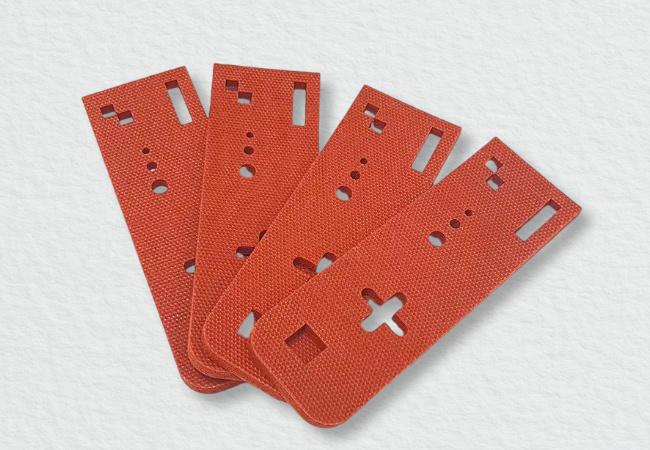
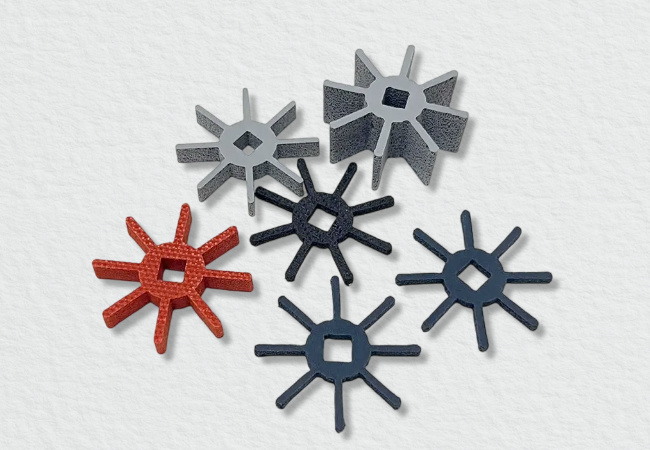
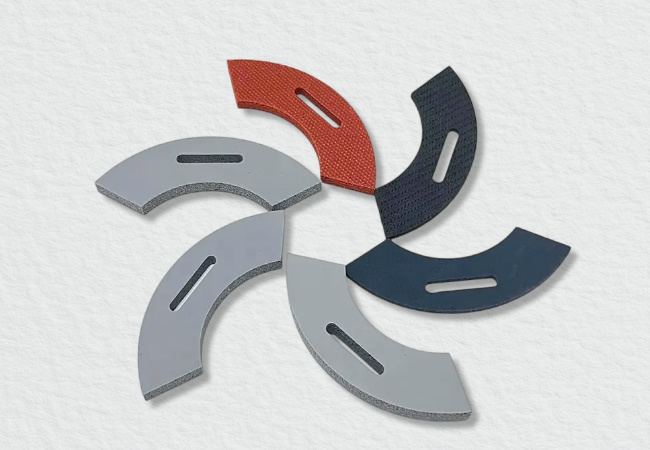
Quality Die-Cutting Rubber Sheet Manufacturing
- Over 20 years of Die Cutting experience
- ISO9001 certified, any size, style, design, color can be customized to meet your needs
- Efficient Die-Cutting Rubber Sheet Solutions from China
- Applicable to various fields
- Product Details
- Application Overview
- Material Insights
- Rubber sheets are flexible and return to shape after stretching or compression.
- Rubber sheets resist friction and wear, making them ideal for heavy-use applications.
- Rubber sheets handle chemicals like acids and alkalis without damage.
- They block gas, liquid, and dust, perfect for sealing applications.
- Rubber sheets resist aging caused by natural elements or chemicals, lasting longer.
- Electrical Insulation: Some rubber sheets provide strong insulation for electrical and electronic uses.
With years of die-cutting experience, has provided services across various industries using Rubber Sheet materials. Here are its main applications:
- Industrial Applications: Rubber sheets are used for sealing, insulation, and vibration dampening in industries. Materials like EPDM are commonly used for automotive seals due to their weather resistance.
- Automotive and Motorsports: Rubber sheets are used in car bumpers, tyres, floor mats, and hoses, as they can withstand wear, extreme temperatures, and chemicals.
- Aerospace: Rubber sheets are essential in aircraft for floor coverings, seals, gaskets, and hoses, due to their ability to handle extreme temperatures and harsh chemicals.
- Marine: In the marine industry, rubber sheets are used for boat floors, decks, and fenders, as they resist water and harsh conditions.
- Construction: Rubber sheets are used for roof membranes, floor coverings, and joint seals. Their insulation properties make them ideal for waterproofing and soundproofing.
- Medical and Pharmaceutical: Due to their low allergenic properties and resistance to liquids, rubber sheets are used in surgical gloves, tubing, and masks.
- Sports and Fitness: Rubber sheets are used in sports facilities and playgrounds for shock absorption and non-slip surfaces.
With years of die-cutting experience, introduces the various types of rubber sheets and their unique characteristics:
- Natural Rubber Sheets: Known for excellent elasticity, flexibility, and wear resistance, these sheets are ideal for seals, gaskets, and flooring due to their strong mechanical properties.
- Synthetic Rubber Sheets: These include different types such as:
- EPDM: Great for outdoor use due to its weather and ozone resistance.
- Neoprene: Known for its oil, ozone, and heat resistance, suitable for automotive and industrial use.
- Silicone: Can handle extreme temperatures and is perfect for medical and food processing industries.
- Nitrile: Resistant to oil, fuel, and chemicals, making it ideal for the automotive and petroleum industries.
- Specialty Rubber Sheets:
- Viton: Offers excellent resistance to chemicals, heat, and oil, used in extreme industrial conditions.
- Butyl: Known for its gas barrier properties, ideal for applications requiring strong gas resistance.

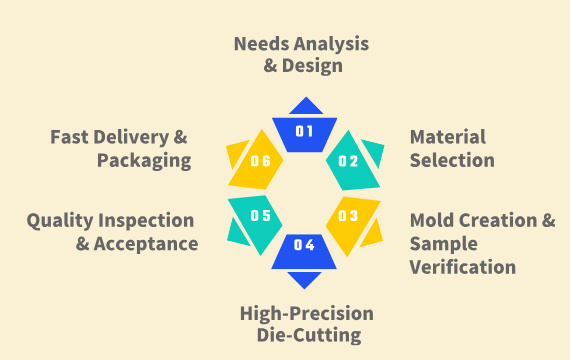
Custom Die-Cut Solutions with Rubber Sheet
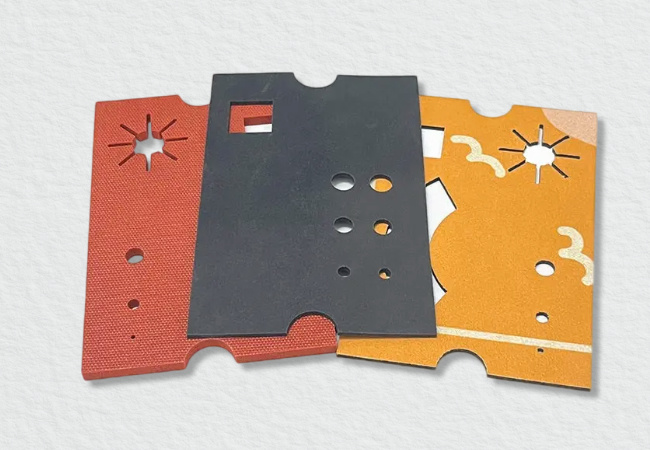
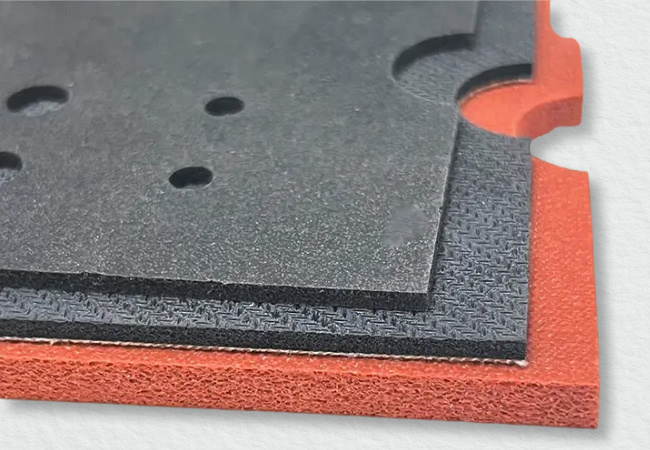
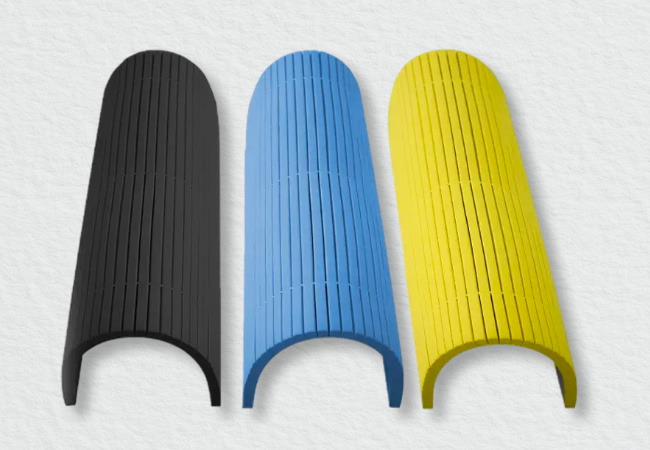
We specialise in providing customised die-cut services using high-quality materials like Rubber Sheet. Whether you’re working in automotive electronics, security, or other industries, we deliver precision-cut solutions tailored to your specific needs. Our quick turnaround, diverse material options, and advanced cutting techniques ensure your products meet the highest standards, helping you save costs and speed up production.
Rubber Sheet Die Cutting Process
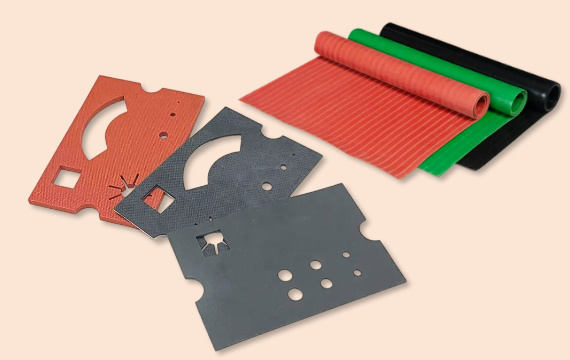
Explore More Die Cutting Materials
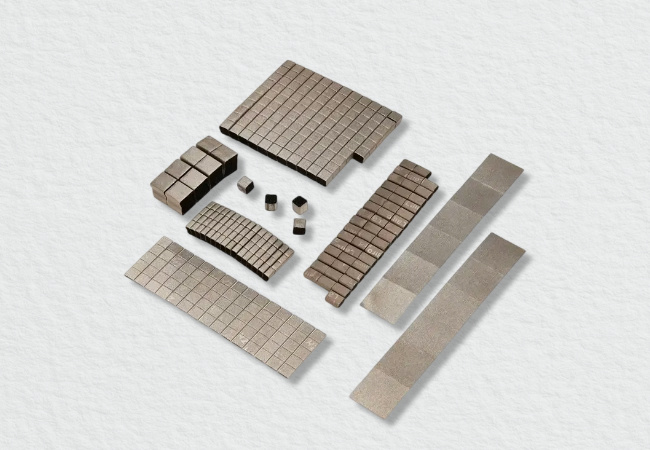
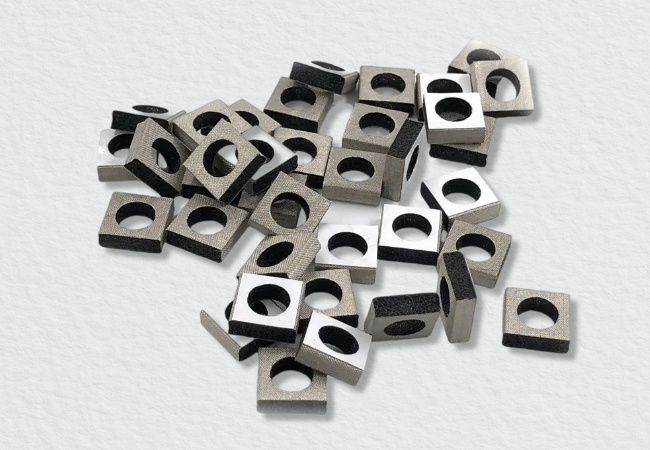
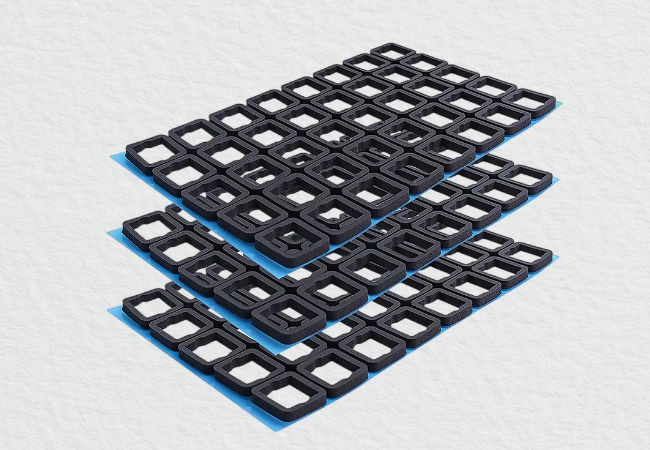
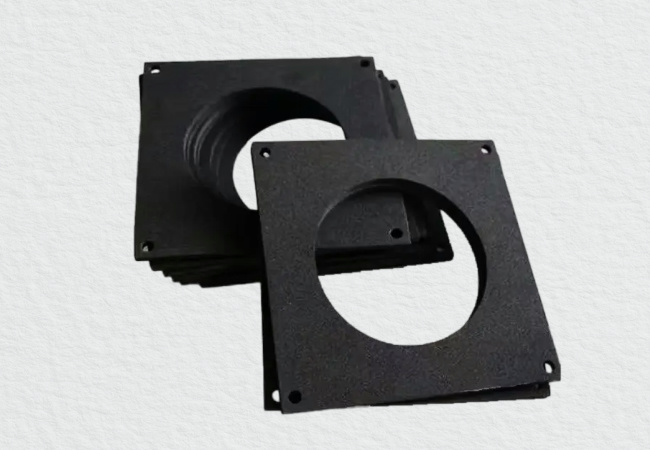

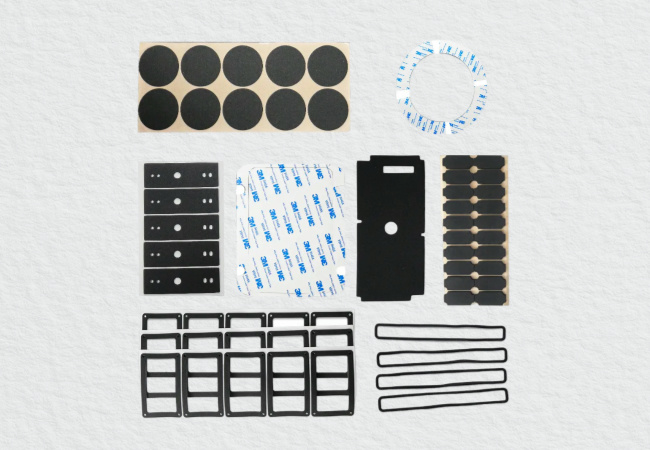


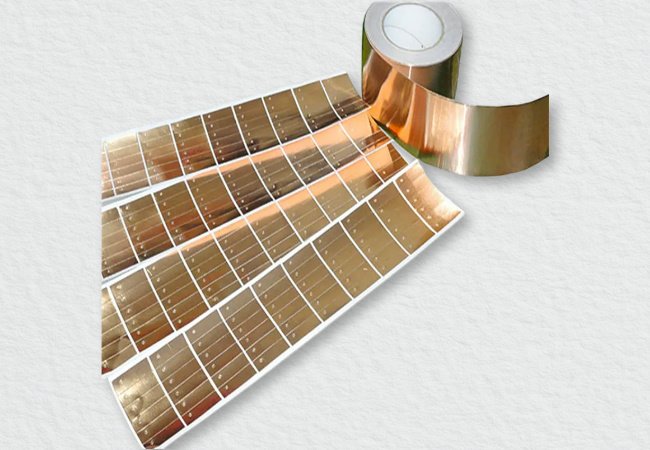
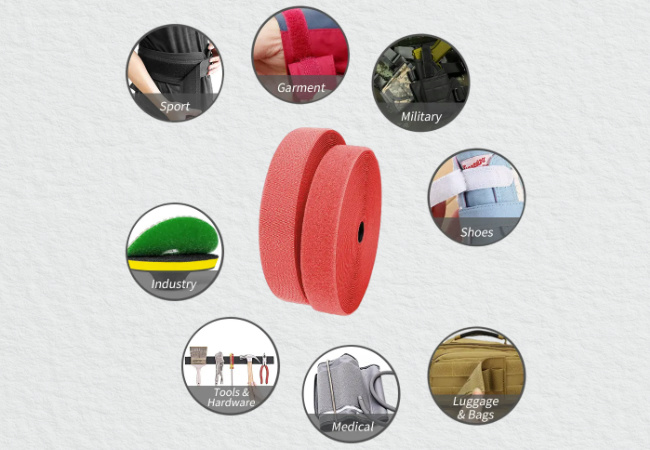
Rubber Sheet – Our Precision Die-Cutting Solutions
Our Die-Cutting Equipment

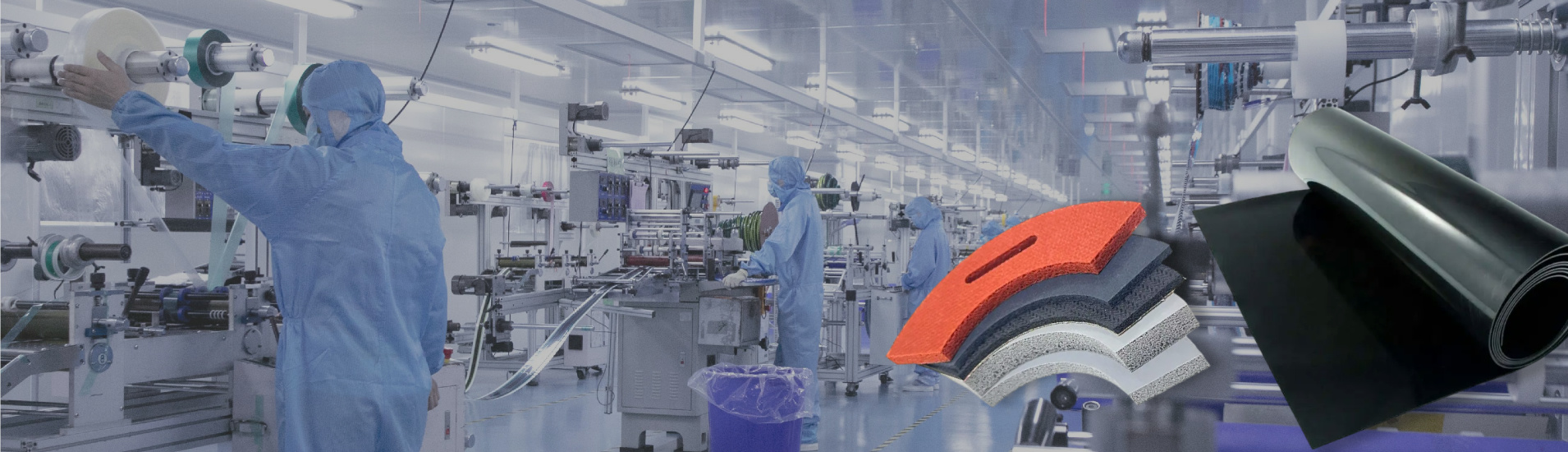
Our Rubber Sheet products are manufactured in a Class 1000 cleanroom, ensuring optimal cleanliness and product consistency. With our automatic roll-to-roll lamination machines, rubber sheets can be bonded seamlessly with adhesive layers or other substrates, guaranteeing stable adhesion and uniform thickness throughout production.

The automatic lamination waste removal system efficiently eliminates excess material without damaging the sheet surface. This process results in clean, precise edges that meet the stringent sealing, cushioning, and vibration-damping requirements of industrial and electronic applications.

Our advanced die-cutting machines are capable of producing highly complex shapes with tolerances up to ±0.01mm, ensuring perfect fit and reliable performance in demanding environments where durability and accuracy are key.
Our Die-Cutting Quality Control

We employ an extensive range of precision inspection equipment to maintain the highest quality standards for Rubber Sheet products. Our 2.5D measurement systems verify dimensional accuracy, while dust particle counters monitor the cleanroom environment in real time. Binocular microscopes and CCD microscopes detect micro-level defects and surface irregularities.

Peel strength testers assess adhesive performance, thickness gauges confirm uniform material distribution, and holding power testers evaluate long-term bonding reliability. Environmental chambers simulate extreme temperature and humidity conditions to ensure product stability over time.

In-process quality control (IPQC) stations operate alongside production lines, allowing continuous monitoring. Additional training inspection stations equip our staff with the skills to maintain precise measurement and defect detection accuracy. For electrically relevant applications, we also conduct low-resistance testing to ensure compliance with technical requirements.
Our Inspection Team

Our inspection team, working within the Class 1000 cleanroom, performs final checks on every Rubber Sheet product before shipment. Each piece undergoes rigorous dimensional verification, surface inspection, and functional testing to ensure it meets the customer’s specifications without compromise.
Our Mold Management

Our mold department supports custom Rubber Sheet applications by designing, manufacturing, and maintaining specialized cutting tools. Using CAD software, CNC machining, and laser cutting, we produce high-precision molds. Regular inspection and fine-tuning ensure consistent production quality and extend mold lifespan.
Our Product Cases

One example involves dust-proof meshes and gasket rings for devices such as smartphones, earphones, and tablets. Made from breathable mesh or precision-cut gaskets, these components protect against dust intrusion without impairing sound quality. Produced in a cleanroom environment, they are subject to strict breathability and tolerance testing.

Another example is foam gaskets used in smartphone camera modules. These components prevent dust ingress and light leakage. Automated lamination ensures accurate bonding, precision die-cutting shapes the intricate profiles, and adhesion strength testing confirms durability—ultimately helping to reduce product return rates.

A third case is PET or PC sheets with protective films, serving as screen protectors, insulation layers, or scratch-resistant films. Dimensional precision is assured by 2.5D measurement, surface quality by CCD microscopy, and durability by environmental stress testing.
Contact us to customize your Rubber Sheet solutions!

Rubber Sheets Perform Differently When Exposed To Chemicals Like Petrol, Benzene, And Toluene.
For Petrol, Materials Like Fluoroelastomer Offer Great Resistance To Oil And Solvents, While Nitrile Rubber (NBR) Works Well With Petrol And Fatty Oils.
Neoprene Rubber Is Also A Good Choice, With Better Resistance To Ozone, Heat, And Chemicals Than Natural Rubber.
When It Comes To Benzene, Some Rubber Types Can Swell Up To 500%, So Careful Selection Is Needed To Avoid Excessive Expansion.
For Toluene, Modified Rubber Stays Stable And Doesn’t Dissolve In Boiling Toluene Or Other Solvents.
Choosing The Right Rubber Sheet Depends On The Specific Chemical And The Performance You Need.

The Dielectric Constant And Power Factor Of Rubber Sheets Vary Based On The Material.
For Natural Rubber, The Dielectric Constant At 1kHz Is Around 2.37.
Commercial Silicone Rubber Typically Has A Dielectric Constant Between 2.6 And 3.4 F/m, With Some Ranges Going From 1.8 To 5.2 F/m.
The Power Factor, Which Measures Conductivity, Is Usually Calculated Using Dielectric Loss. For Silicone Rubber, The Conductivity Is Between 7.7 × 10^-6 And 3.8 × 10^-5 S/m At 50-100 Hz.
The Dielectric Loss For Silicone Rubber Varies Between 1.0 × 10^-12 And 1.6 × 10^-5 S/m Depending On Frequency.
These Figures Give A General Idea Of The Dielectric Performance, But Keep In Mind That It Can Change Based On The Rubber Type, Fillers, And Other Factors.

The Price Differences Between Similar Rubber Sheet Products Can Be Explained By Several Factors:
Raw Material Costs: The price of natural and synthetic rubber can vary, which directly affects the cost of producing rubber sheets. For instance, fluctuations in the price of natural rubber can cause significant price changes.
Manufacturing Process: Different production methods can impact the performance and cost of rubber sheets. Advanced processes might improve performance but also increase costs, which can raise the price.
Market Demand: The demand for rubber sheets, especially durable ones, can push prices up. As industries like mining grow, so does the demand for high-quality rubber sheets.
Brand Influence: Well-known brands often offer better quality and customer service, which can justify a higher price.
Environmental Policies: Stricter environmental regulations may lead to higher production costs, which can affect the final price.
International Trade Policies: Changes in trade policies or tariffs can impact the cost of rubber sheet imports and exports, influencing prices.
Technological Advancements: As synthetic rubber technology improves and natural rubber becomes more sustainably sourced, costs can decrease, but performance might improve, affecting prices.
Market Competition: Increased competition pushes companies to improve their products and pricing strategies, which can affect rubber sheet prices.
Supply Chain Management: Global supply chain fluctuations can also impact costs, leading companies to optimise sourcing to reduce risks.
Product Differences: Variations in materials, production techniques, and quality control standards can lead to price differences among rubber sheets from different manufacturers.

Rubber Sheets Have Two Key Electrical Properties: Volume Resistivity And Breakdown Voltage.
Volume Resistivity Is A Measure Of The Material’s Insulating Ability. Rubber Sheets Generally Have Very High Volume Resistivity, Usually Over 10^8 Ω·cm. This Means They Are Excellent Insulators.
Breakdown Voltage Refers To The Maximum Voltage A Rubber Sheet Can Withstand Before It Breaks Down. For Example, A 4mm Thick Sheet Can Withstand A Minimum Of 15kV, While A 12mm Thick Sheet Can Withstand Up To 45kV.
These Properties Show That Rubber Sheets Are Reliable Insulating Materials, Providing Effective Protection Against Electrical Conductivity.

The Flame Resistance of Rubber Sheets Depends on the Material and Formulation Used.
Different types of rubber have varying levels of flame resistance. For example, Chloroprene rubber (CR) contains chlorine, making it self-extinguishing when exposed to fire.
Adding flame retardants is another way to improve rubber’s flame resistance. Common flame retardants include organic halogens like chlorinated paraffins.
The oxygen index is a key measure of a material’s flammability. If the oxygen index is below 22, the material is highly flammable. Between 22 and 27, it’s considered flame-resistant. Above 27, the material is highly flame-retardant.
Rubber sheets are also classified according to their flame resistance under the UL94 standard. This includes grades like HB, V-2, V-1, and V-0, depending on how quickly they burn and whether they self-extinguish.
Some rubbers, like fluoroelastomers, can burn when exposed to flames but will automatically extinguish once the flame is removed, making them self-extinguishing.
To enhance flame resistance, rubber can be treated with additives or formulated with materials that meet specific national standards for fire resistance.